English
 Español
 tiếng việt
 русский
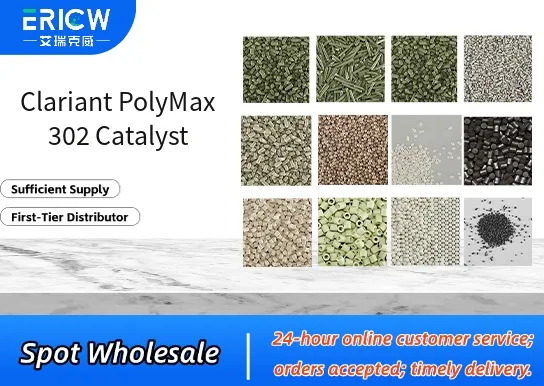
Highly selective palladium-based heterogeneous catalyst for controlled hydrogenation reactions.
Thermally stable support matrix enabling consistent performance under elevated process temperatures.
Low metal leaching profile ensures product purity and extends catalyst service life.
Optimized particle size distribution for efficient mass transfer and reduced pressure drop in fixed-bed reactors.
Designed for easy handling and safe industrial-scale loading with minimal dust generation.
Selective hydrogenation of nitroarenes to aromatic amines in fine chemical synthesis.
Reduction of alkynes to cis-alkenes in pharmaceutical intermediate manufacturing.
Hydrogenative dehalogenation of chlorinated aromatics in agrochemical production.
Catalytic saturation of unsaturated carbonyl compounds in flavor & fragrance applications.
Continuous-flow hydrogenation processes requiring robust, long-cycle catalysts.
| Chemical Type | Palladium on high-surface-area carbon support |
| Product Form | Free-flowing granular solid |
| Appearance | Black granules, uniform morphology |
| Palladium Content | 5.0 wt% ± 0.3 wt% |
| Particle Size Range | 1.2–2.5 mm |
| BET Surface Area | 850–1050 m²/g |
| Moisture Content | < 0.5 wt% |
| Primary Applications | Selective hydrogenation, dehalogenation, alkyne semi-hydrogenation |
Q1: What is the primary function of N-3525 in polyurethane systems?
A: N-3525 is a selective amine-based catalyst designed to promote urethane bond formation (polyol–isocyanate reaction) while offering moderate control over urea (water–isocyanate) reactivity, making it especially suitable for flexible slabstock and molded foam applications where balanced flow, rise, and cure are required.
Q2: How does N-3525 compare to traditional tertiary amine catalysts like DABCO® 33-LV?
A: Unlike highly volatile, strongly gelling catalysts, N-3525 delivers improved hydrolytic stability and reduced volatility, contributing to more consistent processing behavior and lower odor potential. It provides a broader processing window with less sensitivity to formulation variations and ambient humidity.
Q3: Is N-3525 compatible with common polyurethane raw materials such as polyester and polyether polyols, and MDI/TDI isocyanates?
A: Yes, N-3525 demonstrates broad compatibility across standard polyether and polyester polyols, as well as aromatic isocyanates including TDI and MDI variants. It is typically used at low concentrations and integrates smoothly into conventional PU formulations without phase separation or stability issues under normal handling conditions.
Q4: What are the recommended storage and handling conditions for N-3525?
A: Store in original sealed containers in a cool, dry, and well-ventilated area away from direct sunlight and strong oxidizing agents. Keep container tightly closed when not in use. As with all amine catalysts, minimize prolonged exposure to moisture and elevated temperatures to preserve catalytic activity and shelf life.
Contact With Us:
E-mail: wangxingqiang@ericwchem.com
Have a Questions? Call Us:
Add:
Building A1, Jiete Industrial Park, Huangpu District, Guangzhou City, Guangdong Province, China