English
 Español
 tiếng việt
 русский
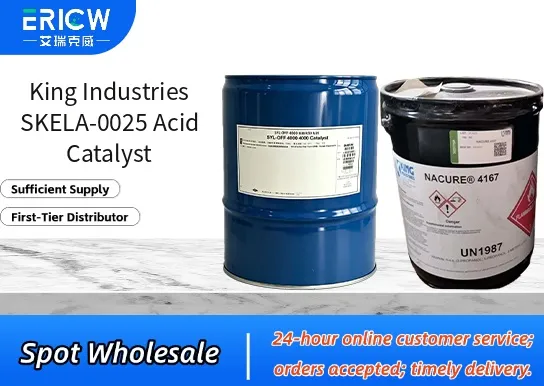
Highly selective Brønsted acid catalyst optimized for esterification and transesterification reactions.
Thermally stable up to 180 °C, enabling robust performance in elevated-temperature batch and continuous processes.
Low volatility and non-corrosive to standard stainless-steel reactor materials (e.g., SS316), reducing equipment maintenance.
Water-tolerant formulation maintains activity in moisture-containing feedstocks without rapid deactivation.
Easy post-reaction removal via mild aqueous wash or simple filtration—no neutralization required.
Biodiesel production via transesterification of vegetable oils and used cooking oil feedstocks.
Synthesis of plasticizers such as dioctyl phthalate (DOP) and diisononyl phthalate (DINP).
Production of specialty esters for fragrances, flavors, and cosmetic emollients.
Catalysis of polycondensation reactions in polyester resin and alkyd binder manufacturing.
Efficient esterification of fatty acids for lubricant additive synthesis.
| Chemical Type | Sulfonated aromatic polymer (solid acid) |
| Product Form | Free-flowing beige to light tan granular solid |
| Appearance | Granules, 0.5–2.0 mm particle size |
| Acid Capacity | ≥4.2 mmol H⁺/g (by NaOH titration) |
| Decomposition Onset Temperature | ≥220 °C (TGA, air atmosphere) |
| Moisture Content | <1.5 wt% (Karl Fischer) |
| Primary Applications | Esterification, transesterification, condensation polymerization |
| Key Features | Heterogeneous, recyclable, non-leaching under standard process conditions |
Q1: What types of resins or polymer systems is SKELA-0025 typically used in?
A: SKELA-0025 is primarily formulated for use in thermosetting resin systems, including phenolic, melamine-formaldehyde, and urea-formaldehyde resins. It is also employed in select epoxy curing applications where controlled acid catalysis supports crosslinking without premature gelation.
Q2: How does SKELA-0025 differ from conventional strong mineral acid catalysts in terms of handling and stability?
A: Unlike volatile or highly corrosive mineral acids, SKELA-0025 offers improved thermal latency and reduced volatility, enabling safer handling and better compatibility with heat-sensitive formulations. Its designed reactivity profile allows for delayed onset of catalysis until elevated temperatures are reached during cure.
Q3: What is the recommended dosage range for SKELA-0025 in resin formulations?
A: Dosage depends on formulation requirements and desired cure profile, but SKELA-0025 is typically used at low concentrations—generally ranging from 0.1% to 2% by weight relative to the resin solids. Optimization should be performed through small-scale cure trials under actual processing conditions.
Q4: Is SKELA-0025 compatible with common co-catalysts or accelerators?
A: Yes, SKELA-0025 demonstrates good compatibility with several widely used co-catalysts—including amine-based accelerators and latent metal carboxylates—allowing formulators flexibility in tuning cure speed, pot life, and final network density.
Q5: Does SKELA-0025 require special storage or handling precautions?
A: SKELA-0025 should be stored in a cool, dry place away from direct sunlight and strong oxidizing agents. While less aggressive than many strong Brønsted acids, standard industrial hygiene practices—including appropriate PPE and ventilation—are recommended during handling to minimize inhalation or skin contact.
Contact With Us:
E-mail: wangxingqiang@ericwchem.com
Have a Questions? Call Us:
Add:
Building A1, Jiete Industrial Park, Huangpu District, Guangzhou City, Guangdong Province, China