English
 Español
 tiếng việt
 русский
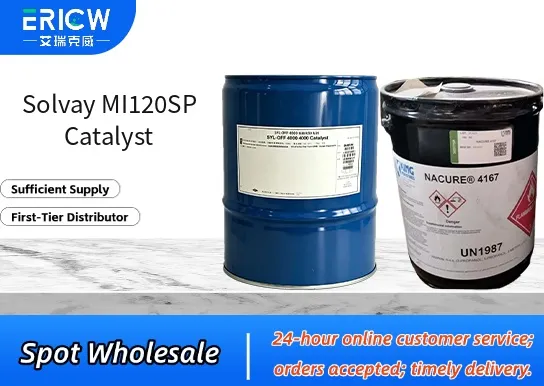
Highly selective palladium-based heterogeneous catalyst optimized for Suzuki–Miyaura cross-coupling reactions.
Thermally stable support matrix enabling consistent performance under extended reaction cycles.
Low residual metal leaching (<5 ppm Pd), ensuring high product purity and reduced downstream purification burden.
Controlled particle size distribution (D50 ≈ 25–35 µm) for optimal filtration and reactor handling.
Pre-activated formulation — ready-to-use without pre-reduction or conditioning steps.
Pharmaceutical intermediate synthesis, including API building blocks and complex heterocycles.
Agrochemical active ingredient manufacturing requiring high chemo- and regioselectivity.
Electronic materials production, such as conductive polymers and OLED precursor coupling.
Specialty fine chemicals, including fragrance molecules and functional dyes.
Academic and industrial R&D labs performing scalable transition-metal-catalyzed C–C bond formations.
| Chemical Type | Palladium on carbon-supported metal complex (Pd/C–ligand hybrid) |
| Product Form | Free-flowing black granular solid |
| Appearance | Uniform dark gray to black granules |
| Palladium Content | 1.2 wt% ± 0.1 wt% |
| Moisture Content | ≤ 5.0 wt% |
| Primary Applications | Suzuki, Heck, and Buchwald–Hartwig amination reactions |
| Key Features | Air-stable, non-pyrophoric, solvent-compatible (THF, DMF, dioxane, toluene) |
| Storage Conditions | Store under inert atmosphere at 2–8 °C; protect from moisture and light |
Q1: What is the primary application of Solvay MI120SP Catalyst?
A: Solvay MI120SP Catalyst is specifically engineered to accelerate hydrosilylation reactions in high-performance silicone elastomer and resin systems, particularly where controlled cure kinetics, low-temperature reactivity, and minimal by-product formation are critical.
Q2: How does MI120SP differ from conventional platinum-based catalysts?
A: MI120SP features a proprietary ligand-stabilized platinum complex designed for enhanced thermal stability and reduced sensitivity to common catalyst poisons—such as nitrogen-, sulfur-, or phosphorus-containing compounds—compared to standard Karstedt’s or Speier’s catalysts.
Q3: What is the recommended handling and storage guidance?
A: Store MI120SP in its original sealed container under inert atmosphere (e.g., nitrogen or argon), at temperatures between 5 °C and 25 °C, and protected from light and moisture. Avoid prolonged exposure to air or elevated temperatures to preserve catalytic activity and shelf life.
Q4: Is MI120SP compatible with condensation-cure silicone systems?
A: No—MI120SP is formulated exclusively for addition-cure (hydrosilylation) silicone chemistries. It is not effective in condensation-cure systems, which rely on tin or titanium catalysts and moisture-driven mechanisms.
Q5: How should dosage be determined for a given formulation?
A: Dosage depends on formulation requirements—including desired pot life, cure temperature, and final physical properties—but is typically used at low concentrations, generally ranging from 0.1% to 2% by weight relative to the silicone polymer base. Optimization through small-scale trials is strongly recommended.
Contact With Us:
E-mail: wangxingqiang@ericwchem.com
Have a Questions? Call Us:
Add:
Building A1, Jiete Industrial Park, Huangpu District, Guangzhou City, Guangdong Province, China