English
 Español
 tiếng việt
 русский
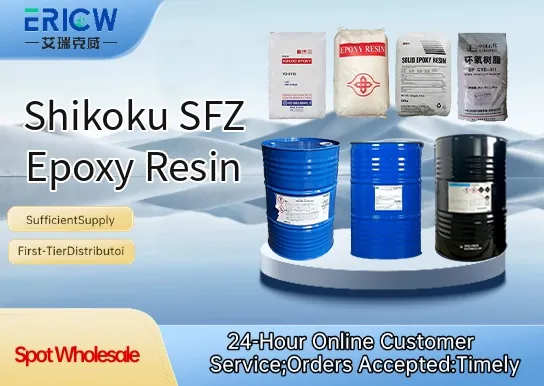
High-purity bisphenol-F based epoxy resin with low chloride content for enhanced electrical insulation.
Excellent thermal stability and glass transition temperature (Tg) suitable for demanding curing profiles.
Low viscosity at elevated temperatures, enabling superior flow and impregnation in composites and encapsulants.
Outstanding chemical resistance to alkalis, solvents, and mild acids after full cure.
Consistent batch-to-batch performance certified under ISO 9001 manufacturing controls.
Electrical insulation systems for high-voltage transformers and bushings.
Encapsulation and potting compounds for power electronics and LED modules.
Structural adhesives in aerospace and automotive composite bonding.
Matrix resin for filament-wound pressure vessels and FRP tanks.
High-performance laminates in printed circuit board (PCB) substrates requiring low Dk/Df.
| Chemical Type | Bisphenol-F epoxy resin |
| Product Form | Light amber viscous liquid |
| Appearance | Clear, transparent, free from gel or sediment |
| Epoxy Equivalent Weight (EEW) | 165–175 g/eq |
| Viscosity (25°C) | 12,000–16,000 mPa·s |
| Chloride Content | ≤ 800 ppm |
| Softening Point | 20–25°C |
| Storage Stability | 12 months at <30°C in sealed original container |
Q1: What is the primary function of Shikoku SFZ Epoxy Resin in coating and adhesive formulations?
A: Shikoku SFZ Epoxy Resin functions as a reactive diluent and viscosity modifier, enhancing flow, leveling, and crosslink density without significantly compromising thermal or chemical resistance.
Q2: Is SFZ compatible with standard amine-based hardeners?
A: Yes, SFZ exhibits good compatibility with aliphatic and cycloaliphatic amines, as well as aromatic amine adducts, enabling flexible cure profile design across ambient and elevated temperature conditions.
Q3: How does SFZ differ from conventional bisphenol-A epoxy resins in terms of reactivity and performance?
A: SFZ offers higher functionality and lower volatility than standard DGEBA resins, resulting in improved network formation, reduced shrinkage, and enhanced hardness development—particularly beneficial in high-performance protective coatings and structural adhesives.
Q4: Can SFZ be used in UV-curable systems?
A: SFZ is not inherently UV-reactive; it requires thermal or catalytic curing. However, it may be incorporated into hybrid UV/thermal systems where co-reactivity with acrylate or cationic components is carefully optimized.
Contact With Us:
E-mail: wangxingqiang@ericwchem.com
Have a Questions? Call Us:
Add:
Building A1, Jiete Industrial Park, Huangpu District, Guangzhou City, Guangdong Province, China