English
 Español
 tiếng việt
 русский
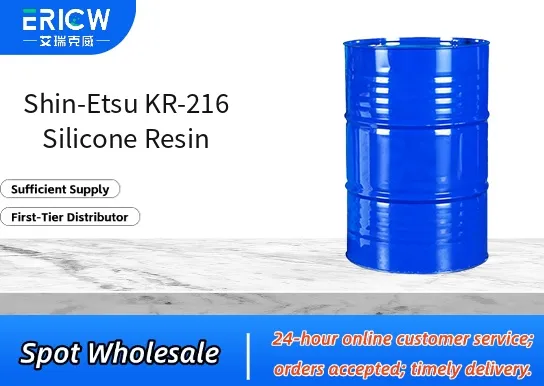
High thermal stability with continuous service capability up to 200 °C
Excellent electrical insulation properties, even under humid conditions
Good compatibility with organic resins and pigments for hybrid formulation
Low viscosity liquid form enabling easy processing and solvent dilution
Forms durable, flexible, and weather-resistant films upon curing
Heat-resistant coatings for industrial ovens and exhaust systems
Electrical insulating varnishes for motors, transformers, and coil windings
Binder in high-temperature pigmented coatings for architectural metal substrates
Component in silicone-modified alkyd and acrylic hybrid topcoats
Matrix resin for specialty composite laminates requiring thermal resilience
| Chemical Type | Methyl-phenyl silicone resin |
| Product Form | Clear to slightly hazy liquid |
| Appearance | Colorless to pale yellow, transparent liquid |
| Primary Applications | Heat-resistant coatings, electrical insulation, hybrid binder |
| Key Features | Thermal stability, electrical insulation, film flexibility, solvent solubility |
| Recommended Solvents | Xylene, toluene, mineral spirits, MEK (subject to formulation testing) |
| Curing Mechanism | Thermally activated condensation (requires elevated temperature) |
| Storage Stability | At least 12 months at 5–30 °C in sealed original container |
Q1: What is the primary function of KR-216 in coating formulations?
A: KR-216 is a methyl-phenyl silicone resin designed to enhance surface hardness, thermal stability, and chemical resistance in high-performance coatings—especially for metal and industrial substrates requiring durable, heat-resistant finishes.
Q2: Is KR-216 compatible with organic resin systems such as acrylics or polyesters?
A: Yes, KR-216 exhibits good compatibility with many thermosetting organic resins—including acrylics, alkyds, and polyester-based systems—when properly dispersed and cured. Compatibility testing under actual formulation conditions is recommended to optimize performance.
Q3: How is KR-216 typically incorporated into a coating formulation?
A: KR-216 is generally supplied as a solvent solution and is added during the let-down stage of coating production. It is typically used at low concentrations and requires adequate mixing to ensure uniform dispersion before crosslinking.
Q4: Does KR-216 require a catalyst for cure, and what are typical curing conditions?
A: KR-216 undergoes condensation curing, often accelerated by ambient moisture or elevated temperature. While it can cure at room temperature over time, optimal film properties are achieved with thermal curing—typically between 150°C and 200°C for 20–60 minutes, depending on film thickness and substrate.
Contact With Us:
E-mail: wangxingqiang@ericwchem.com
Have a Questions? Call Us:
Add:
Building A1, Jiete Industrial Park, Huangpu District, Guangzhou City, Guangdong Province, China