English
 Español
 tiếng việt
 русский
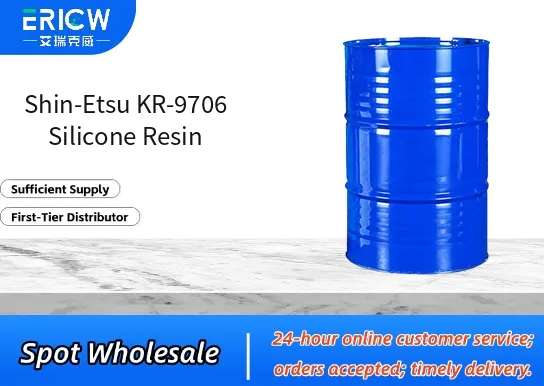
High thermal stability up to 250 °C continuous use temperature.
Excellent electrical insulation properties with low dielectric loss.
Solvent-soluble in aromatic and ketone solvents for versatile formulation.
Good adhesion to metals, ceramics, and common polymer substrates.
Low surface energy enabling hydrophobic and oleophobic surface characteristics.
Heat-resistant coatings for automotive engine components.
Insulating varnishes for electric motors and transformers.
Matrix resin in high-performance composite materials for aerospace.
Surface treatment agents for corrosion-resistant metal finishes.
Functional additive in specialty release coatings and anti-fouling systems.
| Chemical Type | Phenyl-methyl silicone resin |
| Product Form | Clear liquid or flake (solvent-free or solvent-diluted) |
| Appearance | Colorless to pale yellow transparent liquid or solid flakes |
| Primary Applications | High-temperature coatings, electrical insulation, functional additives |
| Key Features | Thermal resistance, dielectric performance, substrate adhesion |
| Benefits | Extended service life under thermal stress, improved insulation reliability, formulation flexibility |
| Solubility | Soluble in toluene, xylene, MEK, acetone; insoluble in water |
| Storage Condition | Store in sealed container at 5–30 °C, avoid moisture and direct sunlight |
Q1: What is the primary function of KR-9706 in coating and ink formulations?
A: KR-9706 is a methyl-phenyl silicone resin designed to enhance surface slip, improve mar resistance, and reduce coefficient of friction in solvent-based and high-solids coatings, overprint varnishes, and gravure/flexo inks.
Q2: Is KR-9706 compatible with common organic resin systems?
A: Yes — KR-9706 exhibits good compatibility with acrylics, polyesters, alkyds, nitrocellulose, and epoxy resins when properly dispersed, especially in aromatic or ketone-based solvents. Compatibility should be verified under actual formulation conditions due to sensitivity to polarity and molecular weight distribution.
Q3: How is KR-9706 typically incorporated into a formulation?
A: It is generally added during the let-down or post-additive stage using high-shear mixing. Pre-dilution in a suitable solvent (e.g., xylene, MEK, or toluene) is recommended to ensure uniform dispersion and avoid agglomeration.
Q4: Does KR-9706 require thermal curing to develop its performance benefits?
A: No — its surface-active effects are largely physical and manifest upon solvent evaporation and film formation. However, elevated temperature drying may improve resin migration to the air interface and optimize final surface properties.
Contact With Us:
E-mail: wangxingqiang@ericwchem.com
Have a Questions? Call Us:
Add:
Building A1, Jiete Industrial Park, Huangpu District, Guangzhou City, Guangdong Province, China