English
 Español
 tiếng việt
 русский
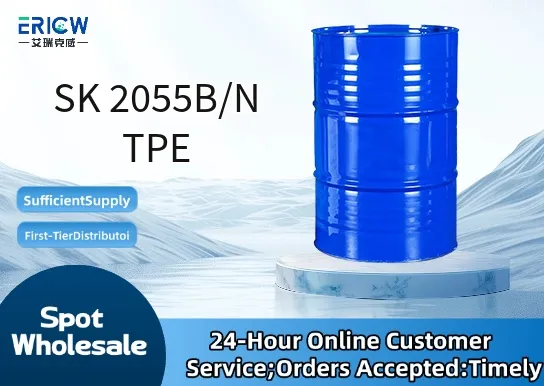
Excellent soft-touch feel with balanced hardness (Shore A 55)
Good processability via injection molding and extrusion without pre-drying
Superior adhesion to polypropylene (PP) and polyethylene (PE) substrates
Enhanced weather resistance and UV stability for outdoor applications
RoHS-compliant and free of phthalates, heavy metals, and halogens
Automotive interior trim components (e.g., door panels, armrests)
Consumer electronics housings and protective grips
Household appliance seals and ergonomic handles
Medical device overmolding for non-sterile contact surfaces
Industrial tool grips requiring slip resistance and fatigue resilience
| Chemical Type | Thermoplastic Elastomer (TPE), SEBS-based |
| Product Form | Pellets |
| Appearance | Off-white, free-flowing granules |
| Hardness (Shore A) | 55 ± 3 |
| Melt Flow Rate (230°C/2.16 kg) | 18–22 g/10 min |
| Density | 0.90–0.92 g/cm³ |
| Key Features | Soft-touch, PP/PE adhesion, low compression set |
| Benefits | Reduced assembly steps, recyclable, consistent surface finish |
Q1: What is SK 2055B/N TPE primarily used for?
A: SK 2055B/N TPE is a thermoplastic elastomer designed to enhance flexibility, soft-touch feel, and impact resistance in rigid polypropylene (PP) and polyethylene (PE) compounds—commonly applied in automotive interior trim, consumer appliance housings, and durable packaging components.
Q2: Is SK 2055B/N TPE compatible with standard PP/PE processing methods?
A: Yes—it is fully compatible with conventional melt-processing techniques including injection molding, extrusion, and blow molding. Its thermal stability and low melt viscosity allow for smooth integration into existing PP/PE production lines without requiring major equipment modifications.
Q3: How does SK 2055B/N TPE affect the mechanical properties of PP-based blends?
A: It significantly improves elongation at break and low-temperature impact performance while maintaining good stiffness balance. The degree of enhancement depends on blend ratio and base resin characteristics, but noticeable improvements in toughness and stress-whitening resistance are typically observed even at modest loading levels.
Q4: Does SK 2055B/N TPE require drying before processing?
A: While not highly hygroscopic, it is recommended to dry SK 2055B/N TPE at 60–70 °C for 2–4 hours prior to processing to ensure optimal surface quality and mechanical consistency—especially in high-precision or aesthetically demanding applications.
Q5: Can SK 2055B/N TPE be used in applications requiring regulatory compliance for food contact or skin-safe materials?
A: SK 2055B/N TPE is formulated without intentionally added heavy metals, phthalates, or primary aromatic amines. While it is suitable for many non-regulated industrial and consumer applications, formal compliance with specific food-contact or medical-grade regulations requires evaluation within the final compound and end-use conditions.
Contact With Us:
E-mail: wangxingqiang@ericwchem.com
Have a Questions? Call Us:
Add:
Building A1, Jiete Industrial Park, Huangpu District, Guangzhou City, Guangdong Province, China