English
 Español
 tiếng việt
 русский
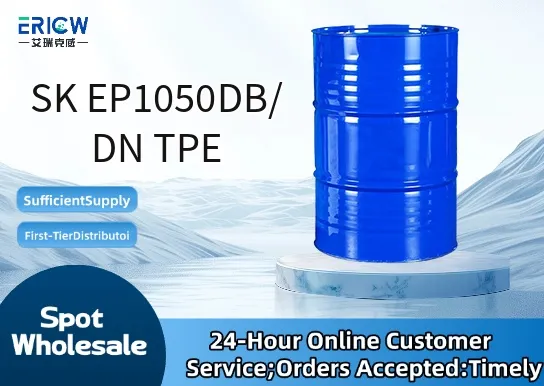
Thermoplastic elastomer (TPE) based on styrenic block copolymer (SBC) with balanced hardness and elasticity.
Excellent processability via injection molding and extrusion without pre-drying.
Good UV resistance and long-term weathering stability for outdoor applications.
Low extractables and compliant with FDA 21 CFR §177.1210 for incidental food contact.
Soft-touch surface finish with high coefficient of friction for ergonomic grip enhancement.
Overmolded grips for power tools and hand-held appliances.
Sealing components in automotive interior trim and HVAC systems.
Flexible hinges and soft-touch buttons for consumer electronics housings.
Medical device handles and non-critical patient interface parts.
Consumer packaging closures requiring tactile feedback and resealability.
| Chemical Type | Styrenic Thermoplastic Elastomer (SBC) |
| Product Form | Pellets |
| Appearance | Opaque off-white granules |
| Shore A Hardness (ASTM D2240) | 50 ± 3 |
| Melt Flow Rate (200°C/5 kg, ASTM D1238) | 12–16 g/10 min |
| Density (ASTM D792) | 0.91 g/cm³ |
| Key Features | Soft-touch, overmolding-compatible, low-odor |
| Primary Applications | Gripping layers, seals, flexible interfaces |
Q1: What is the primary function of SK EP1050DB/DN TPE in thermoplastic elastomer formulations?
A: SK EP1050DB/DN TPE is a high-performance processing aid and compatibilizer designed to enhance melt flow, reduce viscosity, and improve phase dispersion in multi-component TPE systems—particularly those combining polyolefin-based matrices with polar elastomers or fillers.
Q2: Is SK EP1050DB/DN TPE suitable for food-contact or medical-grade TPE applications?
A: While SK EP1050DB/DN TPE is formulated for high purity and low extractables, it is not pre-certified for food-contact or medical use. End-use compliance must be validated by the compounder through full system testing per applicable regulatory frameworks and intended application conditions.
Q3: How does SK EP1050DB/DN TPE affect the mechanical properties of finished TPE parts?
A: When used within recommended dosage ranges, it typically maintains or slightly improves tensile strength and elongation at break while significantly enhancing processability—without compromising long-term thermal stability or surface aesthetics in extruded or injection-molded parts.
Q4: What is the recommended method for incorporating SK EP1050DB/DN TPE into TPE compounds?
A: It is most effectively introduced during the masterbatch stage or early in the compounding process using twin-screw extrusion. Pre-blending with carrier resin prior to feeding ensures uniform distribution and optimal performance across diverse TPE architectures.
Contact With Us:
E-mail: wangxingqiang@ericwchem.com
Have a Questions? Call Us:
Add:
Building A1, Jiete Industrial Park, Huangpu District, Guangzhou City, Guangdong Province, China