English
 Español
 tiếng việt
 русский
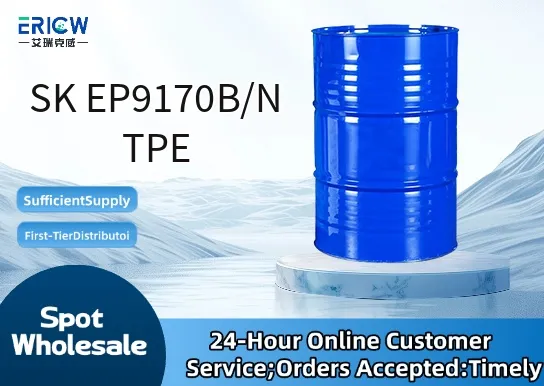
Thermoplastic elastomer based on SEBS (Styrene-Ethylene/Butylene-Styrene) copolymer matrix for excellent elasticity and resilience.
Halogen-free formulation meeting stringent environmental and safety standards including RoHS and REACH compliance.
Outstanding processability via injection molding and extrusion with low melt viscosity and minimal thermal degradation.
Superior soft-touch surface feel and high abrasion resistance for premium end-user applications.
Good adhesion to polypropylene (PP) and polyethylene (PE), enabling reliable two-component overmolding.
Automotive interior trim components, including gear knobs, armrest covers, and dashboard soft-touch overlays.
Consumer electronics housings and protective grips for power tools, toothbrushes, and handheld devices.
Medical device grips and ergonomic handles requiring biocompatibility-supporting material history (ISO 10993 pre-screened).
Household appliance control panels and tactile buttons demanding long-term UV stability and color retention.
Packaging closures and squeezable containers requiring flexibility, seal integrity, and food-contact suitability (FDA-compliant grades available upon request).
| Chemical Type | SEBS-based Thermoplastic Elastomer |
| Product Form | Natural-colored pellets |
| Appearance | Opaque, uniform cylindrical pellets |
| Hardness (Shore A) | 90 ± 3 |
| Melt Flow Rate (230°C / 2.16 kg) | 12–18 g/10 min |
| Density | 0.98–1.02 g/cm³ |
| Continuous Use Temperature | −40°C to +70°C |
| Key Features | Halogen-free, recyclable, PP/PE bondable, low extractables |
Q1: What is SK EP9170B/N TPE and how does it differ from conventional TPEs?
A: SK EP9170B/N TPE is a specialized thermoplastic elastomer formulated for enhanced processability and surface aesthetics in precision-molded applications. Unlike many general-purpose TPEs, it offers improved melt stability during extrusion and injection molding, along with reduced plate-out tendency on tooling surfaces.
Q2: Is SK EP9170B/N TPE suitable for food-contact or medical-grade applications?
A: SK EP9170B/N TPE is not pre-certified for food-contact or medical use. Its suitability for such applications depends on full formulation review, end-product processing conditions, and compliance verification with relevant regional regulatory frameworks. Customers must conduct appropriate migration testing and obtain third-party validation if targeting regulated markets.
Q3: How should SK EP9170B/N TPE be dried prior to processing?
A: To ensure optimal processing performance and part quality, SK EP9170B/N TPE should be dried using desiccant-assisted hot-air drying. Recommended conditions are typically 70–80 °C for 2–4 hours, depending on material history and ambient humidity. Moisture content should be maintained below 0.1 wt% before melting.
Q4: Can SK EP9170B/N TPE be blended with other polymers?
A: Yes — SK EP9170B/N TPE demonstrates good compatibility with several polyolefins (e.g., PP, HDPE) and certain engineering thermoplastics when used as a modifier. However, compatibility and phase morphology depend strongly on blend ratio, processing parameters, and the presence of compatibilizers. Pilot-scale trials are recommended to assess mechanical and aesthetic outcomes.
Contact With Us:
E-mail: wangxingqiang@ericwchem.com
Have a Questions? Call Us:
Add:
Building A1, Jiete Industrial Park, Huangpu District, Guangzhou City, Guangdong Province, China