English
 Español
 tiếng việt
 русский
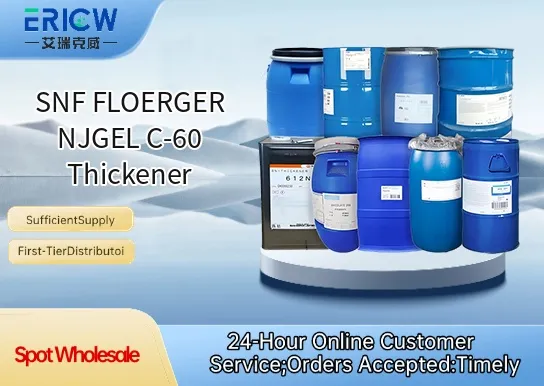
High-efficiency non-ionic associative thickener delivering excellent rheology control in low-to-medium VOC formulations.
Provides outstanding shear-thinning behavior and post-application viscosity recovery for improved sag resistance and leveling.
Compatible with a broad range of anionic, cationic, and non-ionic surfactants, as well as common co-solvents and biocides.
Enables stable viscosity performance across wide pH range (4–11) without requiring alkaline activation.
Low foaming profile supports high-speed application processes including airless spray and roller coating.
Architectural waterborne paints (interior/exterior flat, eggshell, and satin finishes).
Industrial maintenance coatings for metal and concrete substrates.
Water-based wood stains and clear finishes requiring clarity and flow control.
Tile grouts and cementitious repair mortars where thixotropic build and anti-sag performance are critical.
Specialty adhesives and sealants requiring low-viscosity handling and high-green-strength development.
| Chemical Type | Non-ionic hydrophobically modified ethoxylated urethane (HEUR) |
| Product Form | Clear to slightly hazy aqueous solution |
| Appearance | Colorless to pale yellow liquid |
| pH (1% aqueous solution) | 6.5 – 8.5 |
| Active Content (w/w %) | 30.0 ± 1.0% |
| Density (25°C) | 1.02 – 1.06 g/cm³ |
| Viscosity (Brookfield DV-II+ @ 20 rpm, 25°C) | 1,500 – 3,500 cP |
| Primary Applications | Rheology modifier for waterborne coatings, grouts, and construction chemicals |
Q1: What is the primary function of NJGEL C-60 in aqueous formulations?
A: NJGEL C-60 is a high-performance associative thickener designed to provide efficient rheology control—particularly shear-thinning behavior and improved sag resistance—in water-based systems such as architectural coatings, industrial paints, and construction mortars.
Q2: Is NJGEL C-60 compatible with common surfactants and co-thickeners used in latex-based paints?
A: Yes, NJGEL C-60 demonstrates broad compatibility with anionic and nonionic surfactants, as well as other rheology modifiers including cellulosic thickeners and hydrophobically modified alkali-swellable emulsions (HASE), enabling flexible formulation design without significant viscosity instability.
Q3: How should NJGEL C-60 be incorporated into a formulation for optimal performance?
A: It is typically added during the let-down stage under moderate agitation. Pre-dilution with water or a compatible solvent is recommended to ensure uniform dispersion and avoid localized overdosing. Final adjustment of pH to neutral or slightly alkaline conditions enhances its thickening efficiency.
Q4: Does NJGEL C-60 offer any benefits for freeze-thaw stability in waterborne coatings?
A: While not a dedicated freeze-thaw stabilizer, NJGEL C-60 contributes to improved colloidal stability in low-temperature cycling due to its associative network structure, often supporting better retention of viscosity and application properties after repeated freeze-thaw exposure when used within recommended dosage ranges.
Contact With Us:
E-mail: wangxingqiang@ericwchem.com
Have a Questions? Call Us:
Add:
Building A1, Jiete Industrial Park, Huangpu District, Guangzhou City, Guangdong Province, China