English
 Español
 tiếng việt
 русский
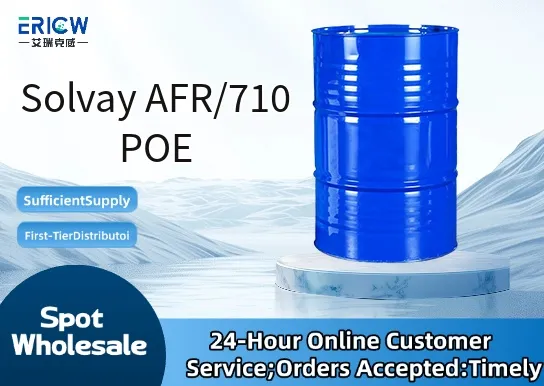
High thermal and hydrolytic stability for extended service life in demanding refrigeration systems.
Excellent miscibility with HFC, HFO, and next-generation low-GWP refrigerants including 1234yf and R-513A.
Low pour point and superior low-temperature fluidity for reliable compressor lubrication down to –45 °C.
Low volatility and high viscosity index ensure consistent film strength across operating temperature ranges.
Non-corrosive to common elastomers and metals used in HVAC&R equipment, supporting system compatibility and longevity.
Hermetic and semi-hermetic compressors in commercial refrigeration units.
Lubricant for centrifugal chillers using low-GWP refrigerants.
Mobile air conditioning systems in electric and hybrid vehicles.
Heat pump applications operating under wide ambient temperature swings.
Retrofit and new-build systems requiring POE-based lubricants compatible with modern refrigerant blends.
| Chemical Type | Polyolester (POE) synthetic lubricant |
| Product Form | Clear, amber liquid |
| Appearance | Transparent, homogeneous liquid |
| Primary Applications | Refrigeration and air conditioning compressors |
| Key Features | High miscibility, thermal stability, low pour point |
| Benefits | Reduced wear, improved energy efficiency, extended oil life |
| Base Fluid Viscosity (ISO Grade) | ISO VG 710 at 40 °C |
| Typical Viscosity Index | 135–145 |
Q1: What is Solvay AFR/710 POE and how does it differ from conventional plasticizers?
A: Solvay AFR/710 POE is a polyolester-based specialty additive designed to provide permanent plasticization and enhanced thermal stability in high-performance polymer systems. Unlike traditional phthalate or adipate esters, it features a non-migrating, high-molecular-weight structure that improves long-term retention and resistance to extraction under demanding processing or service conditions.
Q2: Which polymers is AFR/710 POE compatible with?
A: AFR/710 POE demonstrates excellent compatibility with engineering thermoplastics such as polyamide (PA6, PA66), polyphenylene sulfide (PPS), and polyetherimide (PEI), as well as certain high-temperature elastomers. It is particularly effective in formulations requiring improved melt flow, reduced brittleness, and enhanced dimensional stability at elevated temperatures.
Q3: How should AFR/710 POE be incorporated into polymer blends?
A: It is typically introduced during compounding—either via twin-screw extrusion or high-intensity mixing—under standard processing conditions. Due to its low volatility and thermal stability, it can withstand typical melt temperatures for engineering resins without significant degradation or volatilization.
Q4: Does AFR/710 POE support regulatory compliance for sensitive applications?
A: AFR/710 POE is formulated without intentionally added REACH SVHC substances, heavy metals, or ortho-phthalates. While final regulatory acceptance depends on the end-use application and regional requirements, its composition aligns with evolving industry expectations for safer alternatives in high-value industrial and automotive components.
Contact With Us:
E-mail: wangxingqiang@ericwchem.com
Have a Questions? Call Us:
Add:
Building A1, Jiete Industrial Park, Huangpu District, Guangzhou City, Guangdong Province, China