English
 Español
 tiếng việt
 русский
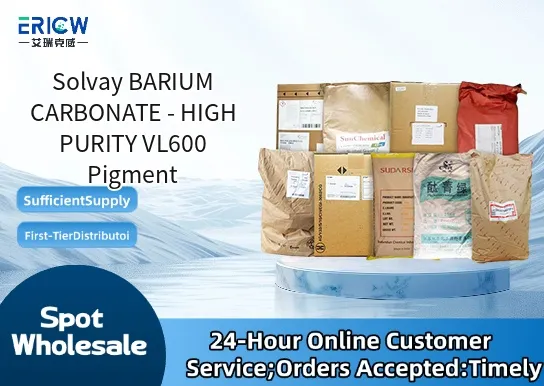
Ultra-high purity (>99.9% BaCO₃) with minimal heavy metal impurities (Pb, Cd, Hg < 1 ppm).
Controlled particle size distribution ensuring excellent dispersion and consistent color development.
Low soluble alkali content (<0.05% as Na₂O), minimizing gelation risk in water-based systems.
High thermal stability suitable for high-temperature processing up to 1300 °C.
ISO 9001-certified manufacturing with strict batch-to-batch reproducibility.
Ceramic glazes and frits for sanitaryware and tableware.
Specialty glass formulations requiring high refractive index and UV stability.
Electroceramics, including dielectric materials for multilayer capacitors (MLCCs).
High-performance coatings for architectural and industrial applications.
Functional fillers in polymer composites demanding chemical inertness and dimensional stability.
| Chemical Type | Barium carbonate (BaCO₃) |
| Product Form | Free-flowing white powder |
| Appearance | White, odorless crystalline powder |
| Primary Applications | Ceramics, glass, electroceramics, specialty coatings |
| Key Features | High purity, low alkali, narrow PSD, thermal stability |
| Benefits | Improved product consistency, reduced defect rates, enhanced firing performance |
| Storage Conditions | Store in dry, cool, well-ventilated area; protect from moisture |
| Regulatory Compliance | REACH registered; RoHS compliant; non-hazardous per GHS classification |
Q1: What distinguishes VL600 from other barium carbonate pigments in the Solvay portfolio?
A: VL600 is specifically engineered for high-purity pigment applications requiring exceptional whiteness, narrow particle size distribution, and low soluble impurities. Its optimized surface characteristics enhance dispersibility in polymer and coating systems compared to standard-grade barium carbonates.
Q2: In which polymer systems is VL600 most commonly used as a functional pigment or filler?
A: VL600 is widely employed in engineering thermoplastics such as polyamide (PA), polybutylene terephthalate (PBT), and polyphenylene sulfide (PPS), where it contributes to dimensional stability, heat resistance, and electrical insulation—without compromising processability or final part aesthetics.
Q3: How should VL600 be handled and stored to maintain its performance integrity?
A: Store in a cool, dry environment under sealed conditions to prevent moisture absorption and carbonation from atmospheric CO₂. Avoid prolonged exposure to humidity during handling, and use dedicated dry-feed equipment to minimize agglomeration in compounding processes.
Q4: Is VL600 suitable for applications requiring regulatory compliance with food-contact or electronics-grade specifications?
A: While VL600 is manufactured under strict quality controls and meets Solvay’s internal high-purity standards, formal regulatory clearance (e.g., for food contact or electronics) depends on the final formulation, processing conditions, and end-use requirements. Customers are advised to conduct application-specific validation testing.
Contact With Us:
E-mail: wangxingqiang@ericwchem.com
Have a Questions? Call Us:
Add:
Building A1, Jiete Industrial Park, Huangpu District, Guangzhou City, Guangdong Province, China