English
 Español
 tiếng việt
 русский
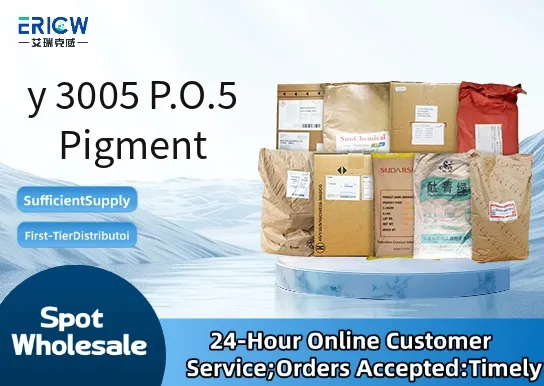
High chroma and excellent color strength in orange-red shade.
Good thermal stability up to 220°C for demanding processing conditions.
Outstanding lightfastness (Grade 7–8 per ISO 105-B02) in polymer systems.
Low volatility and minimal migration in PVC and polyolefin applications.
Consistent batch-to-batch reproducibility meeting ISO 9001 manufacturing standards.
PVC profiles and window frames requiring weather-resistant coloration.
Polypropylene (PP) and polyethylene (PE) injection-molded consumer goods.
Masterbatch formulations for automotive interior plastics.
Industrial coatings for metal and plastic substrates.
Flexible packaging films where FDA-compliant pigments are specified.
| Chemical Type | Organic Pigment, Monoazo (Pigment Orange 5) |
| Product Form | Free-flowing powder |
| Appearance | Orange-red fine powder |
| Primary Applications | Polymer coloring, masterbatches, coatings |
| Key Features | High tinctorial strength, low oil absorption |
| Heat Stability | ≤220°C (20 min, air) |
| Lightfastness (ISO 105-B02) | 7–8 |
| Volatile Matter (105°C, 2 h) | ≤1.0 wt% |
Q1: What is the primary chemical class and typical hue of y 3005 P.O.5 Pigment?
A: y 3005 P.O.5 is an organic pigment belonging to the monoazo subclass, specifically classified under Pigment Orange 5 (PO.5). It delivers a clean, medium-brightness orange shade with good chroma and moderate red undertone, suitable for applications requiring balanced warmth and clarity.
Q2: Is y 3005 P.O.5 suitable for use in food-contact plastics or packaging inks?
A: y 3005 P.O.5 is not pre-approved for direct food-contact applications under major global regulatory frameworks. Its use in packaging inks or plastics intended for food contact requires full formulation-level compliance assessment—including migration testing and regulatory review—by the end-user’s technical and regulatory teams.
Q3: How does y 3005 P.O.5 perform in terms of heat stability and lightfastness?
A: This pigment exhibits moderate to good thermal stability, supporting processing in standard thermoplastic resins up to approximately 220–240 °C for short residence times. Lightfastness is rated as fair to good in most polymer matrices, though performance may vary depending on vehicle system, film thickness, and exposure conditions.
Q4: What are recommended dispersion methods for optimal color development?
A: For best results, high-shear dispersion is recommended—especially in solvent-based systems and engineering thermoplastics. Pre-treatment via melt compounding or use of compatible dispersing aids can significantly improve pigment distribution, gloss, and color strength. Avoid prolonged high-temperature dry blending without proper carrier support.
Contact With Us:
E-mail: wangxingqiang@ericwchem.com
Have a Questions? Call Us:
Add:
Building A1, Jiete Industrial Park, Huangpu District, Guangzhou City, Guangdong Province, China