English
 Español
 tiếng việt
 русский
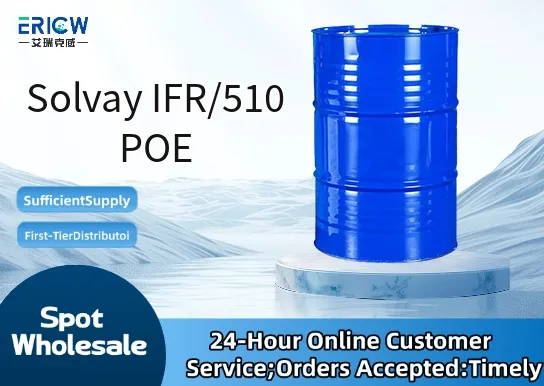
High thermal and hydrolytic stability for extended service life in demanding environments.
Excellent miscibility with polyolefins and engineering thermoplastics, enabling uniform dispersion in flame-retardant formulations.
Halogen-free, phosphorus-nitrogen synergistic chemistry meeting stringent environmental and regulatory requirements (e.g., RoHS, REACH).
Low volatility and minimal plate-out during processing, ensuring consistent extrusion and injection molding performance.
Enables UL 94 V-0 rated flame retardancy at low loading levels in polypropylene and polyethylene compounds.
Flame-retardant polypropylene (PP) for automotive interior components.
Wire and cable jacketing compounds requiring low smoke and zero halogen emissions.
Electrical enclosures and connectors in consumer electronics and industrial equipment.
Household appliance housings where UL 94 V-0 compliance and processability are critical.
Sustainable packaging materials requiring fire-safe, recyclable polymer solutions.
| Chemical Type | Phosphorus-nitrogen intumescent flame retardant |
| Product Form | Free-flowing white to off-white granules |
| Appearance | Uniform granular solid, free of visible impurities |
| Primary Applications | Polyolefin-based flame-retardant compounds (PP, PE) |
| Key Features | Halogen-free, low smoke, UL 94 V-0 capable |
| Benefits | Enhanced process stability, improved mechanical property retention vs. conventional IFRs |
| Density (g/cm³) | 1.35–1.45 (at 23°C) |
| Thermal Decomposition Onset (°C) | ≥260 (by TGA, 10% weight loss, N₂ atmosphere) |
Q1: What is Solvay IFR/510 POE and how does it differ from conventional plasticizers?
A: Solvay IFR/510 POE is a polyolester-based functional additive designed for use in high-performance polymer systems, particularly where thermal stability, low volatility, and compatibility with engineering thermoplastics are required. Unlike traditional phthalate or adipate plasticizers, it offers enhanced hydrolytic stability and reduced migration under elevated temperature conditions.
Q2: In which polymer systems is Solvay IFR/510 POE most commonly used?
A: It is primarily employed in polyamide (PA6, PA66), polyphenylene sulfide (PPS), and high-temperature polyesters such as PBT and PET—especially in applications requiring long-term performance under thermal stress, like automotive under-hood components and electrical connectors.
Q3: How should Solvay IFR/510 POE be incorporated into a polymer formulation?
A: It is typically introduced during compounding via twin-screw extrusion, either as a neat liquid or pre-diluted in a carrier resin. Good dispersion is achieved at standard melt temperatures; no special drying or pre-treatment is required prior to processing.
Q4: Does Solvay IFR/510 POE affect the mechanical properties of the final compound?
A: When used within recommended dosage ranges, it generally maintains or slightly improves impact resistance and ductility without significantly compromising tensile strength or heat deflection temperature—particularly in semi-crystalline polymers subjected to thermal aging.
Q5: Is Solvay IFR/510 POE compatible with common flame retardant systems?
A: Yes—it demonstrates good compatibility with both halogen-free (e.g., metal hydroxides, phosphinates) and certain halogenated flame retardants, supporting stable melt rheology and minimal plate-out during extended processing cycles.
Contact With Us:
E-mail: wangxingqiang@ericwchem.com
Have a Questions? Call Us:
Add:
Building A1, Jiete Industrial Park, Huangpu District, Guangzhou City, Guangdong Province, China