English
 Español
 tiếng việt
 русский
Highly selective for hydrogenation of unsaturated carbonyl compounds under mild conditions.
Thermally stable up to 200 °C, enabling robust process operation in continuous reactors.
Low metal leaching (<0.5 ppm Ni) ensures product purity and catalyst longevity.
Engineered for easy handling and filtration—non-pyrophoric and free-flowing powder.
Consistent batch-to-batch performance validated per ISO 9001 manufacturing protocols.
Pharmaceutical intermediate synthesis, including chiral ketone reduction.
Fine chemical production of fragrances and flavor precursors.
Agrochemical active ingredient manufacturing (e.g., pyrethroid intermediates).
Polymer additive synthesis, such as saturated diols for polyurethane precursors.
Electronics-grade specialty monomer purification via selective dehalogenation.
| Chemical Type | Nickel-based heterogeneous catalyst with proprietary support matrix |
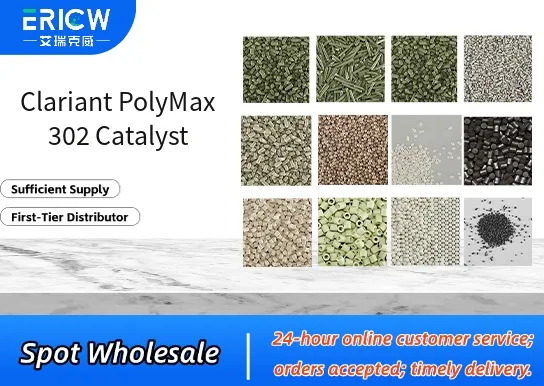
| Product Form | Free-flowing gray-black granular powder |
| Appearance | Uniform granules, 0.5–2.0 mm particle size distribution |
| Primary Applications | Selective hydrogenation, deoxygenation, and reductive amination |
| Key Features | Non-pyrophoric, low dust generation, high surface area (>80 m²/g) |
| Benefits | Reduced reactor fouling, extended catalyst life (>1,000 h TOS), simplified downstream separation |
| Storage Conditions | Store under inert atmosphere (N₂ or Ar) at 15–25 °C, away from moisture and oxidizers |
| Regulatory Compliance | REACH registered; compliant with ICH Q5 and Q7 guidelines for pharmaceutical use |
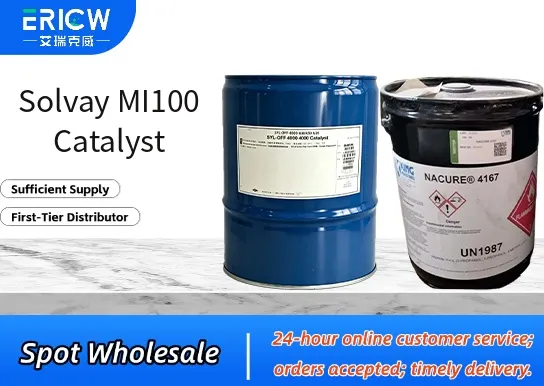
Q1: What is the primary function of Solvay MI100 Catalyst in silicone elastomer systems?
A: Solvay MI100 Catalyst is a platinum-based curing agent specifically engineered to promote efficient hydrosilylation crosslinking in addition-cure liquid silicone rubber (LSR) and high-consistency rubber (HCR) formulations. It enables rapid, reproducible vulcanization under controlled thermal conditions with minimal side reactions.
Q2: How should Solvay MI100 Catalyst be handled and stored to maintain activity?
A: MI100 should be stored under inert atmosphere (e.g., nitrogen or argon), protected from moisture, light, and elevated temperatures. It is recommended to keep it refrigerated at 2–8 °C in its original sealed container. Prior to use, allow the material to equilibrate to room temperature and avoid repeated exposure to air to prevent deactivation or precipitation.
Q3: Is Solvay MI100 Catalyst compatible with common silicone inhibitors and processing additives?
A: Yes — MI100 demonstrates good compatibility with standard platinum inhibitors (e.g., alkynols, enynes) used for pot-life extension, as well as common fillers, pigments, and rheology modifiers in silicone formulations. However, compatibility should always be verified empirically within the specific formulation due to potential interactions with sulfur-, nitrogen-, or phosphorus-containing compounds.
Q4: What are typical dosage guidelines for Solvay MI100 Catalyst in LSR applications?
A: Dosage depends on formulation requirements, desired cure speed, and part geometry, but MI100 is typically used at low concentrations — generally ranging from 0.1% to 2% by weight relative to the base polymer. Optimization is recommended via small-scale trials to balance reactivity, scorch safety, and final mechanical properties.
Contact With Us:
E-mail: wangxingqiang@ericwchem.com
Have a Questions? Call Us:
Add:
Building A1, Jiete Industrial Park, Huangpu District, Guangzhou City, Guangdong Province, China