English
 Español
 tiếng việt
 русский
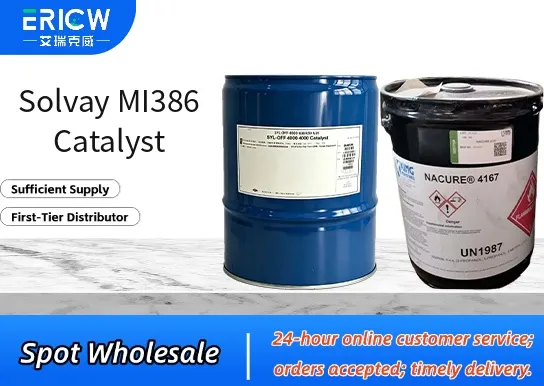
Highly selective palladium-based heterogeneous catalyst for efficient cross-coupling reactions.
Thermally stable up to 180 °C, enabling robust performance in demanding process conditions.
Low leaching profile ensures consistent catalytic activity and minimizes metal contamination in final products.
Engineered for excellent dispersion on carbon support, enhancing surface accessibility and reaction kinetics.
Compatible with standard industrial reactors and scalable from lab to production volumes.
Pharmaceutical intermediate synthesis via Suzuki-Miyaura coupling.
Agrochemical active ingredient manufacturing requiring high chemoselectivity.
Electronic materials development, including conductive polymer precursors.
Specialty fine chemical production under mild solvent and temperature conditions.
OLED material synthesis where residual metal content must meet stringent purity standards.
| Chemical Type | Palladium on activated carbon (Pd/C) |
| Product Form | Free-flowing black powder |
| Appearance | Black granular solid |
| Palladium Loading | 5.0 wt% ± 0.3 wt% |
| Carbon Support Type | High-surface-area acid-washed coconut-shell carbon |
| Moisture Content | ≤ 5.0 wt% |
| Primary Applications | Cross-coupling reactions (Suzuki, Heck, Stille) |
| Storage Conditions | Store under inert atmosphere at 2–25 °C; protect from moisture and strong oxidizers |
Q1: What is the primary function of Solvay MI386 Catalyst in polymer synthesis?
A: Solvay MI386 Catalyst is a specialized transition metal-based catalyst designed to promote controlled condensation or addition reactions—particularly in high-performance thermoplastic polyesters and polyether-ester elastomers—enabling improved molecular weight development and narrow polydispersity under moderate processing conditions.
Q2: Is Solvay MI386 Catalyst suitable for food-contact or medical-grade polymer applications?
A: Solvay MI386 Catalyst is formulated for industrial polymer manufacturing and may be used in certain regulated applications where final resin compliance is achieved through subsequent purification and validation. End-use suitability depends on full system assessment—including thermal stability, residual metal content, and regulatory clearance of the finished article—and must be confirmed in collaboration with Solvay technical support and regulatory experts.
Q3: How should Solvay MI386 Catalyst be handled and stored to maintain performance?
A: Store in original sealed containers under dry, inert atmosphere (e.g., nitrogen) at room temperature, away from moisture, strong oxidizers, and direct sunlight. Due to its sensitivity to hydrolysis and oxidation, handling should occur in controlled environments using appropriate PPE and moisture-free equipment to preserve catalytic activity and shelf life.
Q4: Can Solvay MI386 Catalyst be used in combination with other catalysts or stabilizers?
A: Yes—MI386 Catalyst can be integrated into multi-component catalytic systems, including synergistic combinations with phosphites or hindered phenols, provided compatibility is verified via small-scale trials. Interactions with acidic or strongly coordinating additives may affect activity, so formulation optimization is recommended prior to scale-up.
Contact With Us:
E-mail: wangxingqiang@ericwchem.com
Have a Questions? Call Us:
Add:
Building A1, Jiete Industrial Park, Huangpu District, Guangzhou City, Guangdong Province, China