English
 Español
 tiếng việt
 русский
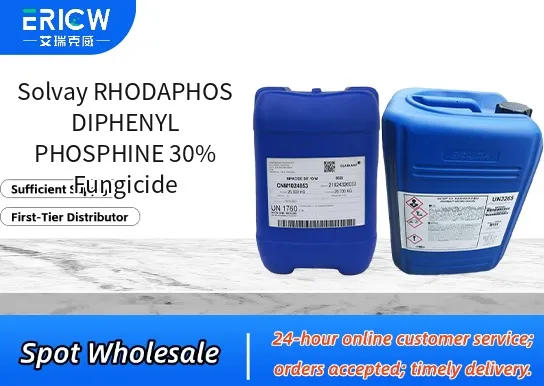
Highly effective broad-spectrum fungicidal activity against key phytopathogenic fungi including Botrytis, Penicillium, and Aspergillus species.
Stable 30% active ingredient formulation in a non-volatile, low-odor carrier system for improved handling and storage safety.
Compatible with common agricultural adjuvants and tank-mix partners, supporting flexible field application protocols.
Low mammalian toxicity profile (OECD 423 Category 5) and favorable environmental fate characteristics per regulatory screening data.
Thermally stable up to 120°C, enabling integration into heat-tolerant industrial preservation systems.
Post-harvest treatment of fruits and vegetables to suppress mold and decay during cold chain transport and storage.
Preservation of water-based industrial coatings, adhesives, and latex formulations against microbial spoilage.
Protection of leather goods and textile finishes from fungal staining and biodegradation in humid environments.
Supplemental antifungal agent in wood preservatives for interior-use engineered timber products.
| Chemical Type | Organophosphorus fungicide (diphenyl phosphine derivative) |
| Product Form | Liquid concentrate (30% w/w active in propylene glycol monomethyl ether) |
| Appearance | Pale yellow to amber clear liquid |
| Odor | Faint characteristic phosphine-like odor |
| Density (20°C) | 1.08–1.12 g/cm³ |
| pH (1% aqueous dilution) | 6.2–7.0 |
| Flash Point (closed cup) | ≥95°C |
| Shelf Life (unopened, 5–25°C) | 24 months |
Q1: What is the primary mode of action of Solvay RHODAPHOS DIPHENYL PHOSPHINE 30% Fungicide?
A: It functions as a phosphine-based biocidal agent, primarily inhibiting key enzymatic processes in susceptible fungi through interaction with thiol groups and disruption of cellular redox balance.
Q2: In which types of industrial formulations is this product typically incorporated?
A: It is commonly used in water-based industrial coatings, adhesives, sealants, and polymer emulsions where long-term protection against fungal growth during storage and service life is required.
Q3: How should Solvay RHODAPHOS DIPHENYL PHOSPHINE 30% be handled to ensure stability and efficacy in final formulations?
A: It should be added under controlled pH conditions—typically in mildly acidic to neutral systems—and protected from prolonged exposure to strong oxidizers or highly alkaline environments, which may accelerate degradation.
Q4: Is this product compatible with common co-biocides used in industrial preservation systems?
A: Yes, it demonstrates broad compatibility with isothiazolinones, benzisothiazolinone, and certain organic acid preservatives, though synergistic or antagonistic effects should be verified experimentally for each specific formulation matrix.
Contact With Us:
E-mail: wangxingqiang@ericwchem.com
Have a Questions? Call Us:
Add:
Building A1, Jiete Industrial Park, Huangpu District, Guangzhou City, Guangdong Province, China