English
 Español
 tiếng việt
 русский
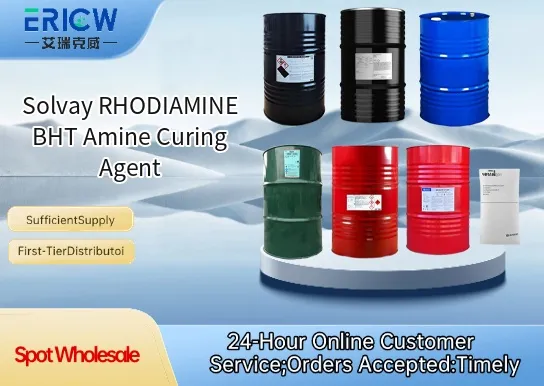
High reactivity with epoxy resins, enabling rapid cure at ambient or moderate temperatures.
Excellent thermal and oxidative stability imparted by the sterically hindered BHT (butylated hydroxytoluene) moiety.
Low volatility and low skin sensitization potential compared to conventional aliphatic amines.
Good compatibility with standard epoxy systems, supporting homogeneous blends without phase separation.
Enables formulation of high-gloss, low-color cured coatings with enhanced long-term weather resistance.
High-performance epoxy adhesives for aerospace and automotive structural bonding.
Protective coatings for industrial steel infrastructure, including offshore platforms and pipelines.
Electrical encapsulation and potting compounds requiring low exotherm and dimensional stability.
Composite matrix resins for wind turbine blades and lightweight transport components.
Marine antifouling topcoats where UV resistance and hydrolytic stability are critical.
| Chemical Type | Sterically hindered aromatic amine |
| Product Form | Liquid |
| Appearance | Pale yellow to amber clear liquid |
| Amine Value | 380–420 mg KOH/g |
| Viscosity (25°C) | 150–250 mPa·s |
| Density (25°C) | 1.02–1.06 g/cm³ |
| Refractive Index (25°C) | 1.520–1.540 |
| Flash Point (PMCC) | ≥120°C |
Q1: What is the primary function of RHODIAMINE BHT in epoxy systems?
A: RHODIAMINE BHT is a sterically hindered aromatic amine curing agent designed to provide controlled reactivity, excellent thermal stability, and low volatility in high-performance epoxy formulations—particularly where extended pot life and reduced amine blush are required.
Q2: Is RHODIAMINE BHT suitable for food-contact or pharmaceutical-grade epoxy applications?
A: RHODIAMINE BHT is not pre-qualified for direct food-contact or pharmaceutical use. Its suitability for such applications depends on full regulatory assessment by the end-formulator—including extraction studies, toxicological review, and compliance with applicable regional regulations.
Q3: How does RHODIAMINE BHT compare to conventional DICY or aliphatic amines in terms of handling and safety?
A: As a solid, low-volatility amine, RHODIAMINE BHT offers improved handling safety versus liquid aliphatic amines—reducing inhalation risk and skin sensitization potential. It does not require refrigeration and exhibits good thermal and oxidative stability during storage.
Q4: What types of epoxy resins is RHODIAMINE BHT typically compatible with?
A: RHODIAMINE BHT demonstrates broad compatibility with standard bisphenol-A and bisphenol-F based liquid and solid epoxy resins, as well as novolac epoxies—especially in applications requiring elevated glass transition temperatures and chemical resistance.
Q5: What is the typical dosage range for RHODIAMINE BHT in epoxy formulations?
A: Dosage depends on formulation requirements and desired cure profile, but RHODIAMINE BHT is generally used at low concentrations—typically ranging from 0.1% to 2% by weight relative to resin solids—and often requires thermal activation above 120 °C for full crosslink development.
Contact With Us:
E-mail: wangxingqiang@ericwchem.com
Have a Questions? Call Us:
Add:
Building A1, Jiete Industrial Park, Huangpu District, Guangzhou City, Guangdong Province, China