English
 Español
 tiếng việt
 русский
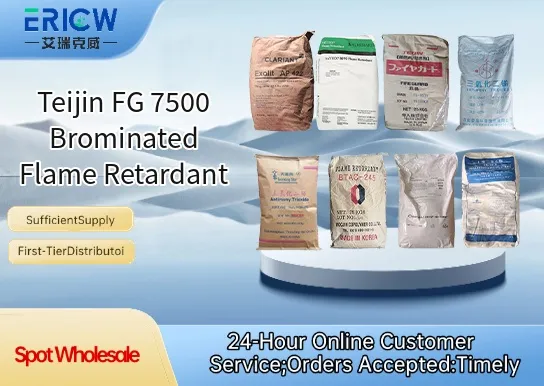
High bromine content ensuring efficient flame inhibition in thermoplastic matrices.
Excellent thermal stability suitable for processing temperatures up to 280 °C.
Low volatility and minimal plate-out, supporting consistent extrusion and injection molding performance.
Good compatibility with engineering plastics including ABS, HIPS, and PC/ABS blends.
Complies with UL 94 V-0 rating at appropriate loading levels in standard test configurations.
Electrical and electronic housings requiring fire-safe polymer solutions.
IT equipment enclosures such as laptop bases, desktop casings, and power supply units.
Consumer appliance components including microwave oven interiors and printer housings.
Automotive interior trim parts where regulated flammability performance is mandatory.
Industrial control panels and junction box materials exposed to elevated ambient temperatures.
| Chemical Type | Polybrominated diphenyl ether (PBDE)-free brominated aromatic compound |
| Product Form | Powder |
| Appearance | Off-white to light beige free-flowing powder |
| Bromine Content (by weight) | Approx. 72–74 wt% |
| Decomposition Onset Temperature | ≥270 °C (TGA, 10 °C/min, N₂) |
| Primary Applications | Flame retardancy for ABS, HIPS, and PC/ABS blends |
| Key Features | Thermal stability, low smoke generation, good polymer compatibility |
| Benefits | Enables UL 94 V-0 compliance with balanced mechanical properties and processability |
Q1: What is the primary polymer compatibility of Teijin FG 7500?
A: Teijin FG 7500 is specifically engineered for use in engineering thermoplastics, particularly polybutylene terephthalate (PBT) and polyethylene terephthalate (PET), where it delivers effective flame retardancy while maintaining good mechanical properties and melt processability.
Q2: How is Teijin FG 7500 typically incorporated into polymer formulations?
A: It is generally introduced via compounding—either as a masterbatch or direct addition—during extrusion. Its thermal stability allows for standard processing temperatures used with PBT and PET, and it exhibits good dispersion without requiring special compatibilizers in most standard formulations.
Q3: Does Teijin FG 7500 meet halogen-related regulatory requirements for electronics applications?
A: While Teijin FG 7500 is a brominated flame retardant, its molecular design supports compliance with major industry expectations for restricted substance lists (e.g., RoHS exemptions where applicable) and is commonly selected for UL 94 V-0 rated electronic housings when formulated appropriately. End-use compliance depends on final part composition and regional regulatory interpretation.
Q4: What are the key handling and safety considerations during processing?
A: As with all fine organic powders, appropriate dust control measures (e.g., local exhaust ventilation) are recommended during handling. Thermal decomposition should be avoided by staying within recommended processing temperature limits for the host polymer. Refer to the Safety Data Sheet (SDS) for detailed occupational hygiene guidance and first-aid information.
Q5: How does Teijin FG 7500 compare to other brominated FRs in terms of electrical insulation performance?
A: Teijin FG 7500 is formulated to minimize ionic impurities and maintain high comparative tracking index (CTI) values in finished compounds—making it suitable for applications demanding stable dielectric properties, such as connectors and insulating components in automotive and consumer electronics.
Contact With Us:
E-mail: wangxingqiang@ericwchem.com
Have a Questions? Call Us:
Add:
Building A1, Jiete Industrial Park, Huangpu District, Guangzhou City, Guangdong Province, China