English
 Español
 tiếng việt
 русский
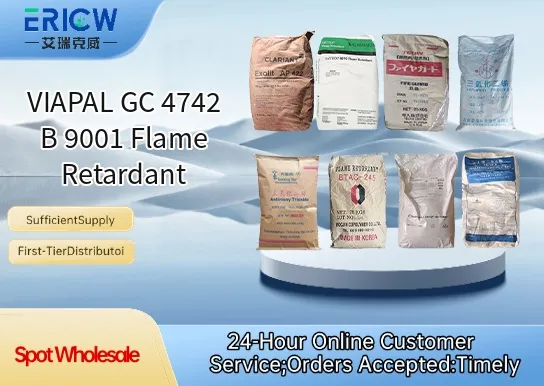
Halogen-free formulation ensuring low smoke and zero corrosive gas emission during combustion.
Excellent thermal stability compatible with high-temperature polymer processing up to 300 °C.
Good dispersion and compatibility in polyolefin-based matrices including PP and PE.
UL 94 V-0 rated performance at loading levels as low as 20–25 wt% in standard test specimens.
RoHS and REACH compliant, supporting sustainable and regulatory-compliant material design.
Flame-retarded polypropylene (PP) for automotive interior components.
Wire and cable jacketing compounds requiring low-smoke, halogen-free fire safety.
Electrical enclosures and housings in consumer electronics and industrial equipment.
Thermoplastic elastomer (TPE) blends used in flexible flame-retarded profiles.
Household appliance parts where UL certification and processing efficiency are critical.
| Chemical Type | Organophosphorus-based, halogen-free flame retardant |
| Product Form | Free-flowing white granules |
| Appearance | Off-white to light beige granules |
| Primary Applications | Polyolefins (PP, PE), TPEs, and engineering thermoplastics |
| Key Features | Low smoke density, non-migrating, good melt flow retention |
| Benefits | Enables UL 94 V-0 rating without antimony trioxide synergy |
| Density (g/cm³) | 1.45–1.55 (at 23 °C) |
| Storage Conditions | Store in cool, dry place; protect from moisture and direct sunlight |
Q1: What types of polymers is VIAPAL GC 4742 B 9001 compatible with?
A: VIAPAL GC 4742 B 9001 is primarily designed for use in thermoplastic polyolefins such as polypropylene (PP) and polyethylene (PE), including both homopolymers and copolymers. It demonstrates good compatibility and dispersion in non-polar matrices and is commonly incorporated into flame-retardant compound formulations for injection molding and extrusion applications.
Q2: How does VIAPAL GC 4742 B 9001 achieve flame retardancy?
A: VIAPAL GC 4742 B 9001 functions primarily through a condensed-phase mechanism—promoting char formation on the polymer surface during thermal decomposition. This char layer acts as a physical barrier that insulates the underlying material, reduces heat feedback, and limits fuel supply to the flame. Its performance is enhanced when combined with synergists such as metal oxides or nitrogen-based co-additives.
Q3: Is VIAPAL GC 4742 B 9001 suitable for halogen-free flame-retardant systems?
A: Yes, VIAPAL GC 4742 B 9001 is a halogen-free organic phosphorus-based flame retardant. It enables formulators to meet growing regulatory and market demands for environmentally sustainable, low-smoke, low-toxicity solutions without relying on brominated or chlorinated chemistries.
Q4: What processing considerations should be taken when incorporating VIAPAL GC 4742 B 9001?
A: The additive exhibits good thermal stability up to typical polyolefin processing temperatures (e.g., 180–240 °C). For optimal dispersion and minimal plate-out, it is recommended to introduce VIAPAL GC 4742 B 9001 via masterbatch dilution or high-shear compounding. Avoid prolonged residence time at elevated temperatures to preserve its functional integrity and prevent premature degradation.
Q5: Does VIAPAL GC 4742 B 9001 affect mechanical properties of the final compound?
A: When used within typical dosage ranges, VIAPAL GC 4742 B 9001 generally maintains acceptable tensile strength and impact performance in PP and PE compounds. However, higher loadings may influence flexibility and elongation at break; formulation optimization—including the use of compatibilizers or reinforcing fillers—is advised to balance flame retardancy with mechanical performance requirements.
Contact With Us:
E-mail: wangxingqiang@ericwchem.com
Have a Questions? Call Us:
Add:
Building A1, Jiete Industrial Park, Huangpu District, Guangzhou City, Guangdong Province, China