English
 Español
 tiếng việt
 русский
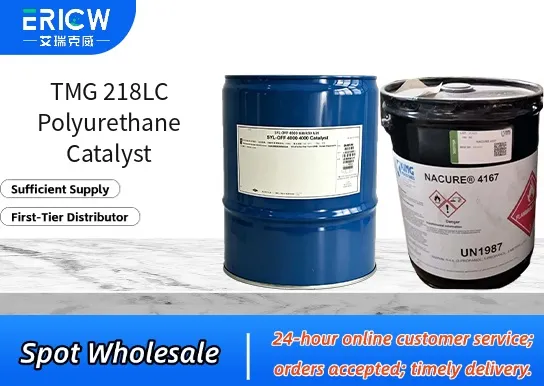
Highly selective tertiary amine catalyst optimized for controlled reactivity in polyurethane systems.
Low volatility and reduced odor profile, supporting improved workplace safety and compliance with VOC regulations.
Excellent compatibility with common polyols, isocyanates, and formulation additives across flexible and rigid foam applications.
Enables balanced gelling and blowing reactions, facilitating consistent cell structure and dimensional stability.
Stable under ambient storage conditions with extended shelf life when sealed and protected from moisture.
Flexible slabstock polyurethane foam for bedding and furniture manufacturing.
Rigid polyurethane and polyisocyanurate (PIR) foams used in building insulation panels.
Automotive seating and interior trim foams requiring low-emission performance.
Spray-applied polyurethane foam (SPF) systems for roofing and industrial insulation.
Integral skin and microcellular foams for automotive dashboards and consumer goods.
| Chemical Type | Tertiary amine-based catalyst |
| Product Form | Liquid |
| Appearance | Clear, pale yellow liquid |
| Primary Applications | Flexible & rigid polyurethane foam production |
| Key Features | Low-VOC, balanced reactivity, thermal stability |
| Benefits | Improved foam uniformity, reduced emissions, processing flexibility |
| Storage Conditions | Store in original sealed container at 15–25°C, protect from moisture |
| Shelf Life | 24 months from date of manufacture under recommended conditions |
Q1: What is the primary function of TMG 218LC in polyurethane systems?
A: TMG 218LC is a highly selective tertiary amine catalyst designed to promote the urethane reaction (isocyanate–polyol coupling) while minimizing side reactions such as trimerization or excessive foaming. It delivers balanced reactivity and improved flow characteristics in demanding applications like microcellular elastomers and high-performance coatings.
Q2: Is TMG 218LC suitable for low-emission or odor-sensitive polyurethane formulations?
A: Yes — TMG 218LC is formulated to exhibit significantly lower volatility and reduced amine odor compared to conventional aliphatic amine catalysts. Its low-vapor-pressure structure supports compliance with stringent indoor air quality requirements and helps minimize post-cure emissions in automotive interiors and furniture applications.
Q3: How does TMG 218LC compare to traditional DABCO® catalysts in processing behavior?
A: Unlike many standard DABCO-type catalysts, TMG 218LC offers enhanced latency at ambient temperatures combined with rapid activation upon heating. This provides greater processing window control — particularly beneficial in reaction injection molding (RIM) and cast elastomer systems where pot life and demold time must be precisely balanced.
Q4: Can TMG 218LC be used in water-blown flexible foam systems?
A: While TMG 218LC is primarily optimized for non-aqueous or low-water-content systems (e.g., integral skin, microcellular, and coating formulations), it may be incorporated into water-blown flexible foams when fine-tuned alongside co-catalysts. However, its selectivity profile makes it less ideal as a sole catalyst in high-water-content slabstock applications where strong gelling and blowing balance is required.
Contact With Us:
E-mail: wangxingqiang@ericwchem.com
Have a Questions? Call Us:
Add:
Building A1, Jiete Industrial Park, Huangpu District, Guangzhou City, Guangdong Province, China