English
 Español
 tiếng việt
 русский
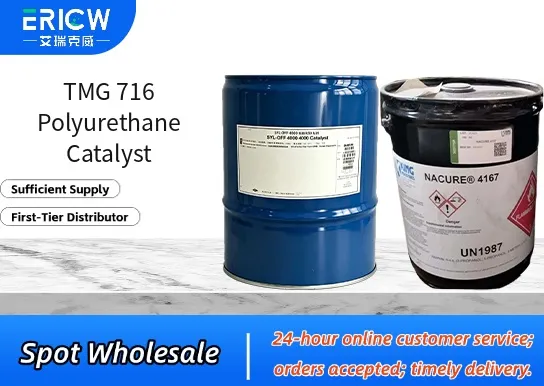
Highly selective tertiary amine catalyst optimized for polyol-isocyanate reaction kinetics.
Low volatility and minimal odor, supporting safer handling and improved workplace air quality.
Excellent compatibility with common polyether and polyester polyols used in flexible and rigid PU systems.
Enables balanced reactivity—promotes gelation without excessive foaming, improving cell structure uniformity.
Non-corrosive to processing equipment and stable under standard storage conditions (25°C, dry, ventilated).
Flexible slabstock foam for mattresses and furniture upholstery.
Rigid polyurethane insulation foams for refrigeration and building envelope applications.
Integral skin and microcellular elastomers for automotive interior parts.
Coating and adhesive formulations requiring controlled pot life and rapid cure development.
Reaction injection molding (RIM) and reinforced RIM (RRIM) systems.
| Chemical Type | Tertiary amine catalyst (N,N,N′,N′-tetramethyl-1,3-butanediamine derivative) |
| Product Form | Liquid |
| Appearance | Colorless to pale yellow clear liquid |
| Density (25°C) | 0.89–0.91 g/cm³ |
| Viscosity (25°C) | 8–12 mPa·s |
| Refractive Index (20°C) | 1.430–1.440 |
| pH (1% aqueous solution) | 10.5–11.2 |
| Storage Stability | ≥12 months in original sealed container at <25°C, protected from moisture |
Q1: What is the primary function of TMG 716 in polyurethane systems?
A: TMG 716 is a tertiary amine-based catalyst designed to promote the urethane reaction (isocyanate–polyol coupling), offering balanced reactivity and improved flow characteristics—particularly beneficial in flexible slabstock and molded foam applications.
Q2: Is TMG 716 compatible with water-blown and low-emission formulations?
A: Yes, TMG 716 exhibits good compatibility with water-blown systems and is frequently selected for low-VOC and emission-sensitive polyurethane foams due to its non-volatile nature and minimal odor profile compared to traditional amine catalysts.
Q3: How does TMG 716 compare to DABCO® catalysts in terms of processing behavior?
A: TMG 716 provides a more moderated gelling profile than highly active catalysts like DABCO® 33-LV, supporting extended cream time and improved mold fill—making it suitable for complex molded parts where flow control and demold time balance are critical.
Q4: What is the typical dosage range for TMG 716 in standard flexible foam formulations?
A: Dosage is formulation-dependent, but TMG 716 is typically used at low concentrations—generally ranging from 0.1% to 2% by weight relative to the polyol component—to achieve desired cure kinetics without compromising foam stability or physical properties.
Contact With Us:
E-mail: wangxingqiang@ericwchem.com
Have a Questions? Call Us:
Add:
Building A1, Jiete Industrial Park, Huangpu District, Guangzhou City, Guangdong Province, China