English
 Español
 tiếng việt
 русский
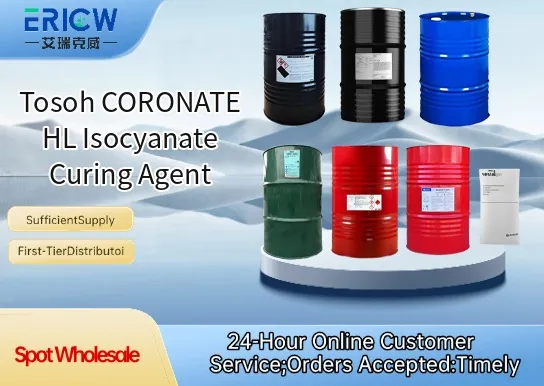
Highly reactive aliphatic isocyanate based on hexamethylene diisocyanate (HDI) trimer chemistry.
Excellent weather resistance and UV stability—ideal for outdoor applications requiring long-term color and gloss retention.
Low viscosity enables easy handling, efficient mixing with hydroxyl-functional resins, and improved formulation flexibility.
Non-yellowing performance ensures superior clarity and aesthetic consistency in clearcoats and light-colored coatings.
Complies with major global regulatory standards for industrial coating systems, including REACH and VOC-compliant formulations.
Automotive OEM clearcoats and refinish topcoats.
High-performance industrial maintenance coatings for infrastructure and equipment.
Architectural and façade coatings requiring durability and aesthetic integrity.
Aerospace exterior protective coatings and primer-surfacer systems.
Plastic and composite part coatings demanding flexibility and adhesion without substrate stress.
| Chemical Type | Aliphatic HDI-based trimer isocyanate |
| Product Form | Liquid |
| Appearance | Clear, pale yellow to colorless liquid |
| NCO Content (wt%) | 18.5–19.5% |
| Viscosity at 25°C (mPa·s) | 1,200–1,800 |
| Density at 25°C (g/cm³) | 1.14–1.17 |
| VOC Content (g/L) | <100 (as supplied) |
| Primary Applications | Two-component polyurethane coatings for automotive, industrial, and architectural use |
Q1: What is the primary chemical composition of CORONATE HL?
A: CORONATE HL is a low-viscosity, aliphatic polyisocyanate based on hexamethylene diisocyanate (HDI) trimer chemistry, modified to provide enhanced storage stability and controlled reactivity in two-component coating and adhesive systems.
Q2: How does CORONATE HL differ from standard HDI isocyanates in terms of performance?
A: Compared to conventional HDI monomers or dimers, CORONATE HL offers improved hydrolytic stability, reduced volatility, and more consistent gel-free pot life—making it especially suitable for high-solids, UV-resistant, and weather-durable coatings where long-term clarity and gloss retention are critical.
Q3: What types of resins is CORONATE HL typically paired with?
A: It is commonly formulated with hydroxyl-functional acrylics, polyesters, and polyether polyols in two-component polyurethane systems—particularly where excellent color stability, flexibility, and resistance to yellowing under UV exposure are required.
Q4: What are recommended handling and storage conditions?
A: Store in tightly sealed containers under dry, cool conditions (below 30°C), protected from moisture and direct sunlight. Avoid repeated exposure to ambient humidity during dispensing, as isocyanates are moisture-sensitive and may form surface haze or CO₂ bubbles if contaminated.
Q5: Is CORONATE HL compatible with common catalysts used in polyurethane curing?
A: Yes—it responds well to standard tertiary amine and organometallic catalysts (e.g., dibutyltin dilaurate or zinc octoate), though catalyst selection and dosage should be optimized based on desired pot life, cure speed, and final film properties.
Contact With Us:
E-mail: wangxingqiang@ericwchem.com
Have a Questions? Call Us:
Add:
Building A1, Jiete Industrial Park, Huangpu District, Guangzhou City, Guangdong Province, China