English
 Español
 tiếng việt
 русский
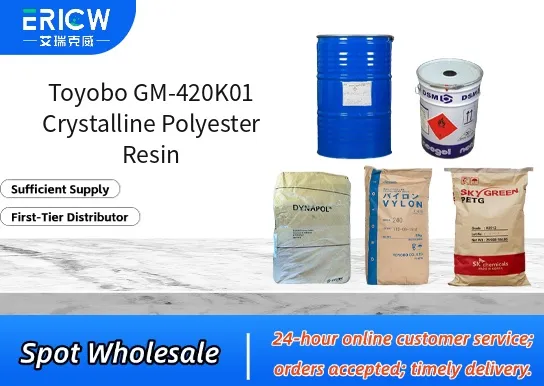
High crystallinity enabling rapid melt solidification and excellent dimensional stability.
Outstanding thermal resistance with continuous use temperature up to 150°C.
Low moisture absorption (<0.2% at 23°C, 50% RH) ensuring consistent processing and end-product reliability.
Excellent chemical resistance to hydrocarbons, aliphatic solvents, and weak acids.
Good flow characteristics for injection molding and extrusion of precision thin-walled components.
Automotive under-hood components including sensor housings and connector bodies.
Electrical and electronic parts such as terminal blocks, relay bases, and coil bobbins.
Industrial fasteners and structural clips requiring high stiffness and creep resistance.
Consumer appliance housings exposed to elevated ambient temperatures.
Food-contact compliant packaging trays (subject to regional regulatory approval).
| Chemical Type | Copolyester (Terephthalate-based crystalline polyester) |
| Product Form | Pellets |
| Appearance | Off-white translucent granules |
| Melt Temperature (DSC, 10°C/min) | 258–262°C |
| Density (ASTM D792) | 1.32–1.34 g/cm³ |
| Moisture Content (as received) | ≤0.05 wt% |
| Primary Applications | Engineering thermoplastic parts requiring heat resistance and dimensional fidelity |
| Key Features | Crystalline structure, low warpage, high rigidity, good processability |
Q1: What is the primary functional role of GM-420K01 in powder coating formulations?
A: GM-420K01 serves as a crystalline polyester resin component designed to enhance flow and leveling behavior during curing, while contributing to rapid film formation and improved edge coverage in thermosetting powder coatings.
Q2: How does GM-420K01 differ from conventional amorphous polyesters in powder coating applications?
A: Unlike amorphous polyesters, GM-420K01 exhibits defined crystallinity, resulting in lower melt viscosity at processing temperatures and sharper melting characteristics—enabling better storage stability and reduced blocking tendency in finished powders.
Q3: Is GM-420K01 compatible with standard epoxy-based crosslinkers used in hybrid powder systems?
A: Yes, GM-420K01 is formulated for compatibility with conventional glycidyl-functional crosslinkers, including triglycidyl isocyanurate (TGIC) and selected TGIC-free alternatives, supporting balanced reactivity and mechanical performance in hybrid coatings.
Q4: What handling or processing precautions should be observed when incorporating GM-420K01 into powder coating blends?
A: Due to its crystalline nature, GM-420K01 should be stored in cool, dry conditions to prevent premature agglomeration; pre-blending with other resins prior to extrusion is recommended to ensure uniform dispersion and avoid localized high-viscosity zones.
Q5: Can GM-420K01 be used in low-bake or UV-curable powder systems?
A: GM-420K01 is primarily optimized for conventional thermal-cure powder systems; its crystalline structure and melting profile are not tailored for low-temperature (<140 °C) or UV-initiated cure mechanisms—formulation testing is advised for non-standard curing conditions.
Contact With Us:
E-mail: wangxingqiang@ericwchem.com
Have a Questions? Call Us:
Add:
Building A1, Jiete Industrial Park, Huangpu District, Guangzhou City, Guangdong Province, China