English
 Español
 tiếng việt
 русский
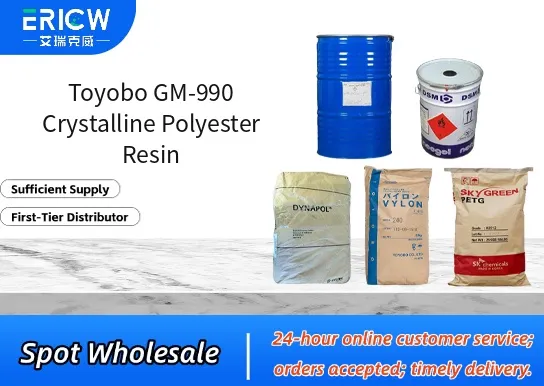
High crystallinity enabling rapid solid-state polymerization and excellent melt stability.
Outstanding thermal resistance with decomposition onset above 380 °C under nitrogen atmosphere.
Low inherent viscosity drift during storage, ensuring consistent processing behavior over time.
Excellent compatibility with common nucleating agents and reinforcing fillers for engineered composites.
Controlled hydrolytic stability suitable for moisture-sensitive extrusion and injection molding processes.
High-performance engineering thermoplastics for automotive under-hood components.
Electrical insulation parts requiring long-term thermal endurance (e.g., connectors, housings).
Durability-critical industrial gears and bearing cages.
Food-contact compliant packaging trays requiring high rigidity and heat resistance.
Specialty fibers for technical textiles demanding dimensional stability at elevated temperatures.
| Chemical Type | Copolyester based on terephthalic acid, ethylene glycol, and controlled crystallinity modifiers |
| Product Form | Pellets |
| Appearance | Off-white to pale yellow, semi-crystalline granules |
| Melt Temperature (DSC, 10 °C/min) | 252–256 °C |
| Crystallinity (XRD) | 42–46 wt% |
| Inherent Viscosity (0.5 g/dL in HFIP) | 0.78–0.82 dL/g |
| Moisture Content (ASTM D6869) | ≤0.05 wt% |
| Residual Acetaldehyde (GC) | ≤1.2 ppm |
Q1: What is the primary functional role of GM-990 in powder coating formulations?
A: GM-990 serves as a crystalline polyester resin component designed to enhance flow, leveling, and edge coverage in thermosetting powder coatings—particularly in hybrid and pure polyester systems where controlled melt viscosity and rapid crystallization upon cooling are beneficial for storage stability and film formation.
Q2: How does GM-990 differ from conventional amorphous polyesters used in powder coatings?
A: Unlike amorphous polyesters, GM-990 exhibits distinct crystallinity, resulting in sharper melting behavior, improved physical stability at ambient temperatures, and reduced tendency toward blocking during storage—making it especially suitable for high-solids or low-bake formulations requiring precise rheological control.
Q3: Is GM-990 compatible with common crosslinkers such as TGIC and β-Hydroxyalkyl Amides (HAA)?
A: Yes, GM-990 is formulated to be compatible with standard epoxy-functional crosslinkers including TGIC and HAA derivatives, enabling robust cure response and mechanical performance across a range of industrial curing schedules.
Q4: What handling or processing considerations should be observed when incorporating GM-990 into powder blends?
A: Due to its crystalline nature, GM-990 should be stored in cool, dry conditions and protected from prolonged exposure to elevated ambient temperatures prior to extrusion. Pre-blending with other components should avoid excessive shear or heat history to preserve its defined crystallinity profile and ensure consistent melt behavior during compounding.
Q5: Can GM-990 be used in food-contact compliant powder coating systems?
A: GM-990 is not pre-certified for food contact use; any application in food-contact scenarios requires full formulation-level evaluation and compliance verification by the end-user according to applicable regional regulations and intended conditions of use.
Contact With Us:
E-mail: wangxingqiang@ericwchem.com
Have a Questions? Call Us:
Add:
Building A1, Jiete Industrial Park, Huangpu District, Guangzhou City, Guangdong Province, China