English
 Español
 tiếng việt
 русский
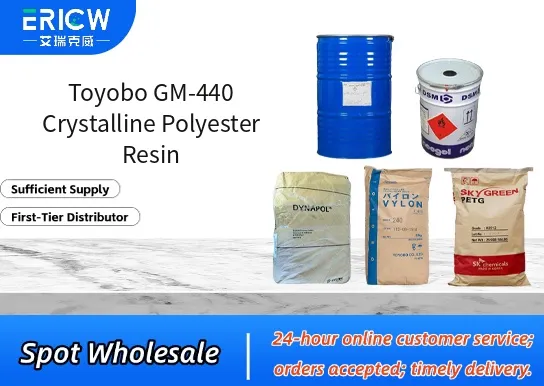
High crystallinity enabling rapid melt solidification and excellent dimensional stability.
Outstanding thermal resistance with continuous use temperature up to 150 °C.
Low moisture absorption (<0.3% at 23 °C/50% RH), ensuring consistent processing and performance.
Excellent chemical resistance to hydrocarbons, alcohols, and weak acids.
Good flowability and low melt viscosity for efficient injection molding and extrusion.
Automotive under-hood components requiring heat resistance and mechanical rigidity.
Electrical and electronic connectors and housings exposed to elevated temperatures.
Industrial gears and precision mechanical parts demanding low creep and high fatigue resistance.
Food-contact-compliant packaging trays (subject to regional regulatory approval).
Reusable medical device components compatible with steam sterilization cycles.
| Chemical Type | Copolyester (crystalline, aromatic-aliphatic) |
| Product Form | Pellets |
| Appearance | Off-white, semi-crystalline granules |
| Melting Point (DSC, 10 °C/min) | 258–262 °C |
| Density (ASTM D792) | 1.32–1.34 g/cm³ |
| Moisture Content (as received) | ≤0.15 wt% |
| Limiting Viscosity Number (LVN, 0.5 g/dL in phenol/1,1,2,2-tetrachloroethane) | 0.75–0.85 dL/g |
| Key Features | High crystallinity, fast cycle time, low warpage, halogen-free |
Q1: What are the primary end-use applications for GM-440?
A: GM-440 is specifically engineered for high-performance food-contact and pharmaceutical packaging applications, including heat-sealable laminates, barrier coatings on paperboard, and inner layers of multilayer flexible packaging where crystallinity, thermal stability, and low extractables are critical.
Q2: How does GM-440 differ from amorphous polyester resins in processing behavior?
A: Due to its crystalline structure, GM-440 exhibits a sharp melting point and rapid solidification upon cooling—enabling faster line speeds in extrusion coating and improved dimensional stability in hot-fill applications. It also offers lower melt viscosity near its melting range compared to many amorphous polyesters, facilitating efficient dispersion and film formation.
Q3: Is GM-440 compatible with common polymer substrates used in packaging laminates?
A: Yes—GM-440 demonstrates excellent adhesion to polypropylene (PP), polyethylene (PE), PET, and aluminum foil when applied via extrusion coating or solvent-based lamination. Its polarity and controlled crystallinity support strong interfacial bonding without requiring additional primers in most standard configurations.
Q4: What handling or storage precautions should be observed for GM-440?
A: As a crystalline resin, GM-440 is sensitive to moisture absorption. It should be stored in original sealed packaging under cool, dry conditions and dried prior to processing if exposed to ambient humidity—typical drying conditions are 120–130 °C for 2–4 hours, depending on equipment and throughput requirements.
Contact With Us:
E-mail: wangxingqiang@ericwchem.com
Have a Questions? Call Us:
Add:
Building A1, Jiete Industrial Park, Huangpu District, Guangzhou City, Guangdong Province, China