English
 Español
 tiếng việt
 русский
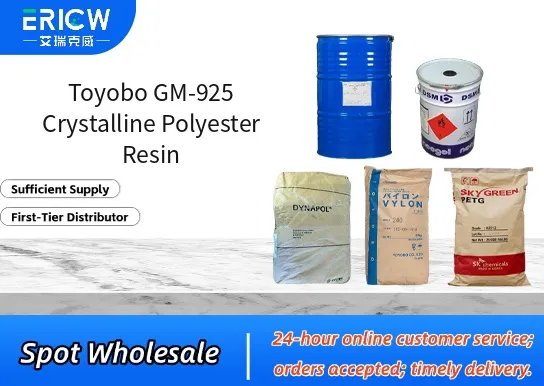
High crystallinity enabling rapid melt-solidification and excellent dimensional stability.
Outstanding thermal resistance with continuous use temperature up to 180 °C.
Low moisture absorption (<0.2% at 23 °C, 50% RH) ensuring consistent processing and performance.
Excellent chemical resistance to hydrocarbons, alcohols, and mild acids.
Good flow characteristics for injection molding and extrusion of precision-engineered parts.
Automotive under-hood components requiring heat resistance and dimensional fidelity.
Electrical connectors and insulating housings in high-reliability electronics.
Industrial pump housings and fluid-handling parts exposed to elevated temperatures.
Food-contact-compliant packaging machinery components (subject to regional regulatory approval).
Reusable medical device housings requiring repeated steam sterilization cycles.
| Chemical Type | Copolyester (crystalline, semi-aromatic) |
| Product Form | Pellets |
| Appearance | Off-white to light beige granules |
| Melt Temperature (DSC, 10 °C/min) | 265–272 °C |
| Crystallinity (XRD) | 40–45% |
| Density (ASTM D792) | 1.32–1.34 g/cm³ |
| Moisture Content (as received) | ≤0.05 wt% |
| Primary Applications | High-temperature engineering thermoplastics |
Q1: What is the primary function of GM-925 in powder coating formulations?
A: GM-925 serves as a crystalline polyester resin component that enhances flow and leveling during cure, improves storage stability of the powder blend, and contributes to rapid film formation with high gloss and excellent mechanical resistance.
Q2: How does GM-925 differ from conventional amorphous polyesters used in powder coatings?
A: Unlike amorphous polyesters, GM-925 exhibits defined crystallinity, resulting in lower melt viscosity at processing temperatures, sharper melting behavior, and improved shelf life—particularly beneficial for low-cure or hybrid system formulations.
Q3: Is GM-925 compatible with standard epoxy resins and curing agents?
A: Yes, GM-925 is designed for compatibility with common epoxy-functional hardeners such as TGIC and β-hydroxyalkylamide (HAA), and performs well in both pure polyester and polyester-epoxy hybrid systems when properly balanced in the formulation.
Q4: What handling precautions should be observed during processing?
A: Due to its crystalline nature, GM-925 should be stored in cool, dry conditions to prevent premature agglomeration. During extrusion, moderate screw shear and controlled feed zone temperatures help maintain consistent dispersion without excessive degradation.
Contact With Us:
E-mail: wangxingqiang@ericwchem.com
Have a Questions? Call Us:
Add:
Building A1, Jiete Industrial Park, Huangpu District, Guangzhou City, Guangdong Province, China