English
 Español
 tiếng việt
 русский
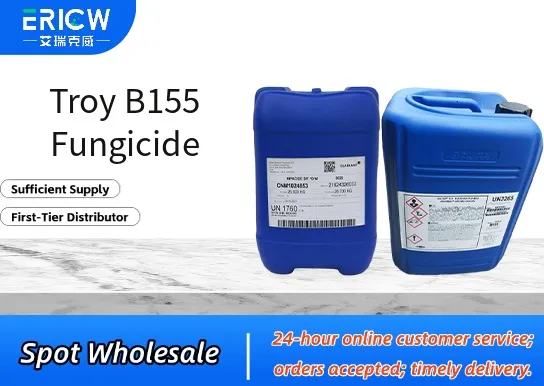
Broad-spectrum fungicidal activity against key Ascomycete and Deuteromycete pathogens.
Non-systemic contact mode of action with rapid knockdown effect on spore germination and mycelial growth.
Low mammalian toxicity and favorable environmental profile for industrial water treatment use.
Stable across a wide pH range (pH 4–10) and compatible with common biocides and corrosion inhibitors.
Non-oxidizing chemistry—preserves integrity of metal surfaces, elastomers, and polymer components.
Cooling water systems in power generation and HVAC installations.
Process water loops in pulp and paper manufacturing facilities.
Recirculating water systems for metalworking fluid sumps and central coolant reservoirs.
Industrial wastewater pretreatment units where fungal biofilm control is critical.
Preservation of aqueous-based coatings, adhesives, and construction chemicals during storage.
| Chemical Type | Heterocyclic thiocarbamate derivative |
| Product Form | Clear to slightly hazy amber liquid |
| Appearance | Homogeneous free-flowing liquid |
| Primary Applications | Industrial water treatment, metalworking fluids, coatings & adhesives preservation |
| Key Features | Contact fungicide, non-systemic, non-oxidizing, pH-stable |
| Benefits | Prevents slime-forming fungi, controls biofilm development, extends system uptime |
| Storage Stability | ≥24 months at 5–30°C in original sealed container |
| Recommended Use Concentration | 50–200 ppm active ingredient (system-dependent) |
Q1: What is the primary mode of action of Troy B155 Fungicide?
A: Troy B155 Fungicide functions as a broad-spectrum protective and curative fungicide, primarily inhibiting fungal cell membrane synthesis through interference with ergosterol biosynthesis pathways. Its activity is effective against a range of common saprophytic and spoilage fungi encountered in industrial water systems and polymer-based formulations.
Q2: In which types of industrial formulations is Troy B155 typically used?
A: Troy B155 is commonly incorporated into water-based industrial coatings, adhesives, construction mortars, grouts, and architectural sealants—especially where extended shelf life and resistance to microbial degradation during storage are critical. It is also suitable for use in certain non-food-contact polymer emulsions and aqueous processing aids.
Q3: Is Troy B155 compatible with common biocides or preservatives used in dual-system preservation?
A: Yes, Troy B155 generally demonstrates good compatibility with isothiazolinones, benzisothiazolinones, and formaldehyde-releasers when used in complementary preservation strategies. However, compatibility testing under actual formulation conditions—including pH, ionic strength, and surfactant profile—is strongly recommended prior to full-scale implementation.
Q4: What are the recommended handling and stability considerations for Troy B155?
A: Troy B155 should be stored in its original sealed container at temperatures between 5 °C and 30 °C, protected from direct sunlight and moisture ingress. It exhibits good thermal and hydrolytic stability in neutral to mildly alkaline aqueous environments but may degrade under strongly acidic conditions or prolonged exposure to elevated temperatures above 45 °C.
Q5: Does Troy B155 require special regulatory approval for use in specific regions?
A: Regulatory status varies by country and application. Troy B155 is not approved for food-contact or pharmaceutical applications. Customers must verify local regulatory requirements—including biocidal product authorization under frameworks such as the EU BPR or EPA registration—before commercial use, as compliance responsibility rests with the formulator or end user.
Contact With Us:
E-mail: wangxingqiang@ericwchem.com
Have a Questions? Call Us:
Add:
Building A1, Jiete Industrial Park, Huangpu District, Guangzhou City, Guangdong Province, China