English
 Español
 tiếng việt
 русский
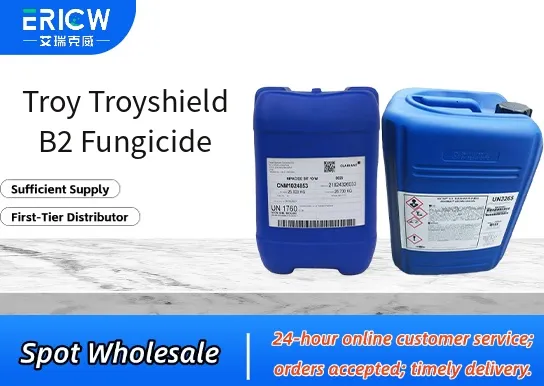
Broad-spectrum fungicidal activity against key ascomycete and basidiomycete pathogens.
Systemic and protective action with translaminar mobility for extended residual control.
Low volatility and favorable environmental profile, supporting sustainable application practices.
Compatible with major adjuvants and commonly used tank-mix partners in integrated pest management programs.
Stable under standard storage conditions (15–30°C), maintaining efficacy over 24 months from manufacture date.
Protection of ornamental nursery stock against powdery mildew and leaf spot diseases.
Control of rust and anthracnose in commercial turfgrass systems, including golf courses and sports fields.
Preventive treatment for fungal diseases in greenhouse-grown vegetable transplants.
Suppression of Botrytis cinerea and Alternaria spp. in high-value horticultural crops.
Use in non-agricultural settings such as botanical gardens and municipal landscape maintenance.
| Chemical Type | Triazole-based fungicide (active ingredient: tebuconazole) |
| Product Form | Emulsifiable concentrate (EC) |
| Appearance | Amber to light brown clear liquid |
| Active Ingredient Concentration | 250 g/L tebuconazole |
| Density (20°C) | 1.08–1.12 g/cm³ |
| pH Range (1% aqueous solution) | 6.0–7.5 |
| Solubility in Water | 50 mg/L at 20°C |
| Primary Applications | Non-food ornamentals, turf, greenhouse horticulture, and municipal landscapes |
Q1: What types of industrial systems is Troyshield B2 Fungicide designed for?
A: Troyshield B2 is formulated for use in water-based industrial process fluids—particularly metalworking fluids, coolants, and circulating water systems—where broad-spectrum control of bacteria and fungi is required to maintain fluid stability and prevent microbial degradation.
Q2: How does Troyshield B2 differ from other fungicidal additives in the Troyshield portfolio?
A: Troyshield B2 is a synergistic blend optimized for enhanced fungal inhibition—especially against yeasts and molds—while maintaining compatibility with common biocide boosters and offering improved residual activity in high-hardness or variable-pH environments compared to single-active alternatives.
Q3: Is Troyshield B2 compatible with anionic and nonionic surfactants commonly found in metalworking formulations?
A: Yes, Troyshield B2 demonstrates good compatibility with a wide range of anionic, nonionic, and amphoteric surfactants used in emulsifiable and semi-synthetic metalworking fluids, supporting stable performance without phase separation or reduced efficacy.
Q4: What is the recommended approach for monitoring and maintaining effective fungicidal protection with Troyshield B2?
A: Regular microbial testing (e.g., dip slides or plate counts) is advised. Re-dosing should be guided by observed microbial load, system conditions, and fluid turnover—not fixed time intervals—to ensure consistent protection while minimizing unnecessary additive accumulation.
Contact With Us:
E-mail: wangxingqiang@ericwchem.com
Have a Questions? Call Us:
Add:
Building A1, Jiete Industrial Park, Huangpu District, Guangzhou City, Guangdong Province, China