English
 Español
 tiếng việt
 русский
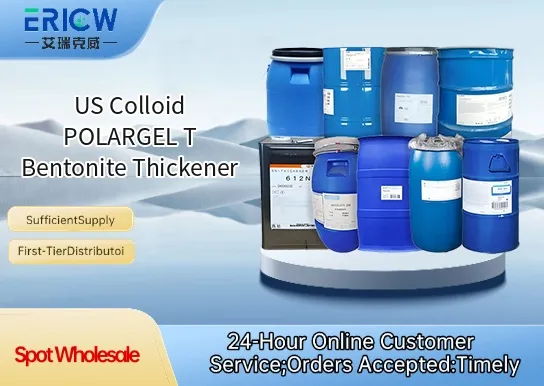
High-yield, sodium-based bentonite specifically engineered for efficient thickening in aqueous systems.
Excellent suspension stability and anti-settling performance in low-shear and static conditions.
Consistent rheological behavior across a broad pH range (5–10) without requiring activation additives.
Low-dosage efficiency—delivers optimal viscosity at concentrations as low as 0.5–2.0 wt%.
Free-flowing, dust-reduced powder formulation for improved handling and operator safety.
Water-based paints and architectural coatings.
Industrial maintenance coatings and protective primers.
Agrochemical suspensions (e.g., SC, SE formulations).
Cleaning and sanitizing solutions requiring suspension of insoluble actives.
Construction grouts and cementitious admixtures.
| Chemical Type | Sodium bentonite clay |
| Product Form | Free-flowing, micronized powder |
| Appearance | Off-white to light tan, fine granular powder |
| Primary Applications | Thickening, suspension, and rheology modification in water-based systems |
| Key Features | High yield value, thixotropic recovery, low soluble salt content |
| Benefits | Improved sag resistance, enhanced storage stability, reduced formulation complexity |
| pH Range (1% dispersion) | 7.0–9.5 |
| Moisture Content (max) | 10.0 wt% |
Q1: What is the primary function of POLARGEL T in formulations?
A: POLARGEL T is a sodium bentonite-based rheological modifier designed to provide suspension stability, viscosity enhancement, and yield stress development in aqueous systems—particularly where thixotropic behavior and anti-settling performance are required.
Q2: How does POLARGEL T differ from conventional bentonite thickeners?
A: POLARGEL T is pre-activated and surface-modified to deliver faster, more consistent dispersion and reduced gel time in water without requiring prolonged aging or high-shear pre-hydration—making it especially suitable for inline processing and high-volume manufacturing environments.
Q3: Is POLARGEL T compatible with electrolytes and hard water?
A: Yes—POLARGEL T exhibits improved tolerance to moderate levels of dissolved salts and divalent cations compared to standard sodium bentonites, though optimal performance is still achieved in low-to-moderate ionic strength systems. Formulators should evaluate compatibility under actual process conditions.
Q4: What types of industrial applications is POLARGEL T commonly used in?
A: It is widely employed in water-based coatings, construction grouts, agricultural adjuvants, drilling fluids, and specialty cleaning gels—where controlled flow, sag resistance, and particle suspension are critical performance requirements.
Q5: How should POLARGEL T be incorporated into a formulation?
A: For best results, disperse POLARGEL T gradually into water or the aqueous phase under moderate agitation. Avoid direct addition to highly viscous or high-solids mixtures. Pre-wetting or use of a dispersing aid may improve uniformity, especially in automated blending systems.
Contact With Us:
E-mail: wangxingqiang@ericwchem.com
Have a Questions? Call Us:
Add:
Building A1, Jiete Industrial Park, Huangpu District, Guangzhou City, Guangdong Province, China