English
 Español
 tiếng việt
 русский
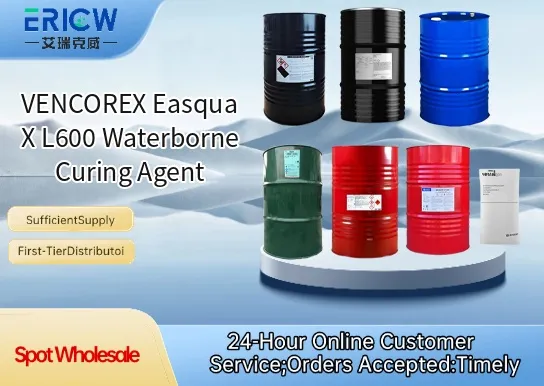
Waterborne polyisocyanate dispersion offering low VOC and reduced environmental impact.
Excellent compatibility with acrylic, polyester, and hybrid waterborne resins.
Fast ambient-cure capability with good pot life stability in formulated systems.
Enhanced film hardness and chemical resistance after full crosslinking.
Non-yellowing performance suitable for clearcoats and light-colored coatings.
Waterborne industrial wood coatings (furniture, cabinetry, flooring).
Automotive refinish clearcoats and basecoat/clearcoat systems.
General metal protective coatings for architectural and appliance applications.
Plastic coatings requiring flexibility and adhesion on ABS, PC, and PP substrates.
High-performance waterborne coil coatings for pre-finished metal sheets.
| Chemical Type | Aliphatic polyisocyanate dispersion (HDI-based) |
| Product Form | Opaque white liquid |
| Appearance | Homogeneous aqueous dispersion |
| Solids Content (wt%) | 58–62% |
| pH | 7.0–8.5 |
| Viscosity (mPa·s, 25°C, Brookfield RVT, spindle #3, 12 rpm) | 150–350 |
| NCO Content (wt%) | 4.2–4.8% |
| Stability (unopened, 25°C) | ≥12 months |
Q1: What types of waterborne resins is Easqua X L600 compatible with?
A: Easqua X L600 is specifically designed for use with waterborne polyurethane dispersions (PUDs), acrylic emulsions, and hybrid acrylic-PUD systems. It provides efficient crosslinking while maintaining colloidal stability and low viscosity in aqueous formulations.
Q2: How does Easqua X L600 affect film formation and final coating properties?
A: It enhances hardness, chemical resistance, and scrub durability without significantly compromising flexibility or low-temperature film formation. The cured films typically exhibit improved mar resistance and reduced water sensitivity compared to uncrosslinked systems.
Q3: Is Easqua X L600 suitable for low-VOC or zero-VOC coatings?
A: Yes — as a waterborne curing agent with negligible volatile organic content and no added solvents or formaldehyde donors, it supports the development of compliant low-VOC and zero-VOC coating systems aligned with current environmental regulations and sustainability goals.
Q4: What is the typical shelf life and storage recommendation?
A: When stored unopened in original packaging at temperatures between 5 °C and 30 °C, Easqua X L600 maintains performance stability for at least 12 months. Avoid freezing and prolonged exposure to high humidity or direct sunlight.
Q5: How should Easqua X L600 be incorporated into a waterborne formulation?
A: It is generally added during the let-down stage under moderate agitation. Pre-dilution with deionized water may be used to facilitate uniform dispersion. Dosage depends on formulation requirements but is typically used at low concentrations to achieve optimal crosslink density without compromising pot life or stability.
Contact With Us:
E-mail: wangxingqiang@ericwchem.com
Have a Questions? Call Us:
Add:
Building A1, Jiete Industrial Park, Huangpu District, Guangzhou City, Guangdong Province, China