English
 Español
 tiếng việt
 русский
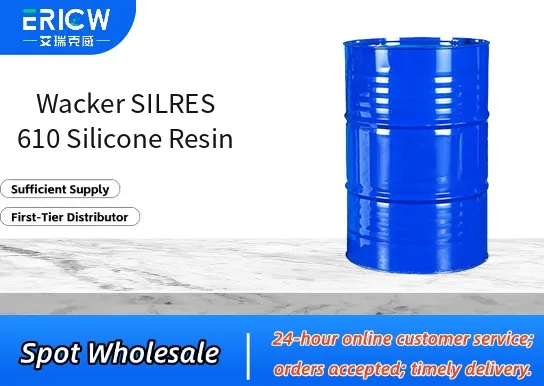
High thermal stability up to 250 °C continuous service temperature.
Excellent weather resistance and UV stability for long-term outdoor performance.
Good compatibility with organic resins including acrylics, polyesters, and alkyds.
Low surface energy enabling superior water repellency and anti-graffiti properties.
Solvent-based formulation with balanced viscosity for easy integration into coating systems.
High-performance architectural coatings for façades and concrete protection.
Heat-resistant coatings for industrial equipment and exhaust components.
Water-repellent impregnation for natural stone, brick, and mortar substrates.
Anti-graffiti topcoats for public infrastructure and transit surfaces.
Hybrid silicone-acrylic exterior wall paints requiring enhanced durability.
| Chemical Type | Methyl-phenyl silicone resin |
| Product Form | Liquid, solvent-based |
| Appearance | Clear to slightly yellowish, homogeneous liquid |
| Solvent | Xylene / aromatic hydrocarbon mixture |
| Solids Content | ~60 wt % |
| Viscosity (25 °C) | ~400–600 mPa·s (Brookfield RV) |
| Density (20 °C) | ~0.92–0.95 g/cm³ |
| Flash Point (PMCC) | ~45 °C |
Q1: What is the primary function of SILRES 610 in coating and ink formulations?
A: SILRES 610 functions primarily as a surface modifier and crosslinking aid, enhancing substrate wetting, improving scratch resistance, and increasing hydrophobicity and chemical resistance in solvent-based and high-solids systems.
Q2: Is SILRES 610 compatible with organic resin systems such as acrylics, alkyds, or polyurethanes?
A: Yes — SILRES 610 is designed for compatibility with a broad range of organic binders, including acrylics, alkyds, and polyurethanes. It typically integrates well without phase separation when added during the let-down stage or early in the grinding process.
Q3: How should SILRES 610 be incorporated into a formulation to ensure optimal performance?
A: For best results, SILRES 610 should be added under moderate agitation after the main binder has been dispersed. Pre-dilution in a compatible solvent (e.g., xylene, butyl acetate, or isopropanol) is recommended to facilitate uniform distribution. Avoid high-shear conditions that may cause premature condensation.
Q4: Does SILRES 610 require heat curing to develop its full functionality?
A: While SILRES 610 can undergo partial condensation at ambient temperatures over time, thermal treatment (typically above 100 °C) significantly accelerates crosslinking and maximizes improvements in hardness, durability, and water repellency.
Contact With Us:
E-mail: wangxingqiang@ericwchem.com
Have a Questions? Call Us:
Add:
Building A1, Jiete Industrial Park, Huangpu District, Guangzhou City, Guangdong Province, China