English
 Español
 tiếng việt
 русский
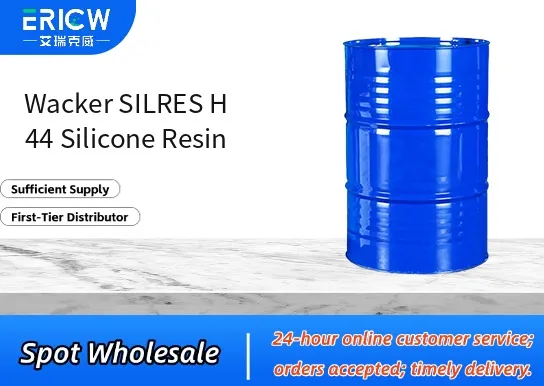
High thermal stability up to 250 °C continuous service temperature.
Excellent weather resistance and UV stability for long-term outdoor performance.
Good compatibility with organic resins, enabling hybrid formulation flexibility.
Low surface energy providing water repellency and anti-soiling properties.
Solvent-based liquid format with adjustable viscosity for diverse processing methods.
Protective coatings for concrete, masonry, and natural stone surfaces.
Water-repellent additives in facade renders and plasters.
Hybrid binders in high-performance architectural paints.
Surface treatment agents for building materials requiring hydrophobicity.
Base resin for heat-resistant industrial coatings.
| Chemical Type | Methyl-phenyl silicone resin |
| Product Form | Liquid |
| Appearance | Clear, colorless to pale yellow liquid |
| Solvent | Xylene / aromatic hydrocarbon mixture |
| Non-Volatile Content | 50 ± 2 wt.% |
| Viscosity (25 °C) | Approx. 15–25 mPa·s |
| Density (20 °C) | Approx. 0.92–0.94 g/cm³ |
| Flash Point (PMCC) | Approx. 35 °C |
Q1: What is the primary function of SILRES H 44 in coating and ink formulations?
A: SILRES H 44 functions as a hydrophobic, heat-resistant silicone resin modifier that enhances surface slip, improves mar resistance, and increases thermal stability in solvent-based and high-solids coatings, overprint varnishes, and industrial inks.
Q2: Is SILRES H 44 compatible with common organic resins and polymers?
A: Yes — it exhibits good compatibility with acrylics, alkyds, polyesters, and cellulose derivatives when properly dispersed or dissolved in suitable solvents. Compatibility should be verified experimentally in the final formulation due to variations in molecular weight and polarity.
Q3: How is SILRES H 44 typically incorporated into a formulation?
A: It is generally added during the let-down or post-addition stage, either pre-dissolved in aromatic or ketonic solvents, or dispersed using high-shear mixing. Thermal stabilization may require brief heating (e.g., 60–80 °C), but prolonged exposure to elevated temperatures before full incorporation should be avoided.
Q4: Does SILRES H 44 contribute to film hardness or crosslinking?
A: While not a self-crosslinking resin, SILRES H 44 can participate in thermally induced condensation reactions at elevated curing temperatures, contributing to enhanced film hardness, chemical resistance, and long-term durability—particularly in baked systems.
Q5: Can SILRES H 44 be used in food-contact compliant coatings?
A: SILRES H 44 is not inherently certified for direct food contact. Its suitability for such applications depends entirely on the full formulation, processing conditions, and compliance verification against applicable regional regulatory frameworks — users must conduct full regulatory assessment and migration testing where required.
Contact With Us:
E-mail: wangxingqiang@ericwchem.com
Have a Questions? Call Us:
Add:
Building A1, Jiete Industrial Park, Huangpu District, Guangzhou City, Guangdong Province, China