English
 Español
 tiếng việt
 русский
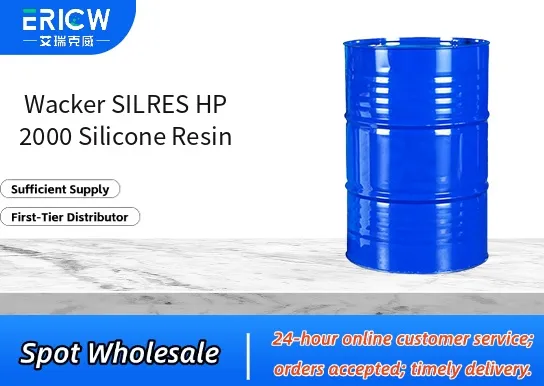
High thermal stability up to 300 °C in air for extended service life under elevated temperatures.
Excellent weather resistance and UV stability, maintaining performance in outdoor exposure.
Good compatibility with organic resins (e.g., acrylics, polyesters) enabling hybrid formulation development.
Low surface energy providing inherent water repellency and anti-graffiti functionality.
Solvent-based liquid format facilitating easy integration into conventional coating and impregnation processes.
High-performance heat-resistant coatings for industrial exhaust systems and engine components.
Weatherproof topcoats for architectural concrete, masonry, and façade protection systems.
Functional additives in anti-corrosion primers for metal substrates exposed to harsh environments.
Water-repellent impregnations for natural stone, brick, and porous building materials.
Base resin in hybrid silicone-acrylic facade paints requiring durability and breathability.
| Chemical Type | Methyl-phenyl silicone resin |
| Product Form | Liquid, solvent-based solution |
| Appearance | Clear to slightly yellowish, low-viscosity liquid |
| Solvent | Xylene / aromatic hydrocarbon blend |
| Non-Volatile Content | Approx. 50 wt % |
| Density (20 °C) | Approx. 0.92 g/cm³ |
| Flash Point (PMCC) | Approx. 45 °C |
| Primary Applications | Heat-resistant coatings, protective impregnations, weatherproof facade systems |
Q1: What is the primary function of SILRES HP 2000 in coating and ink formulations?
A: SILRES HP 2000 is a hydrophobic, solvent-based silicone resin designed to enhance surface properties—such as water repellency, substrate wetting, slip, and mar resistance—without significantly affecting gloss or film integrity. It functions as a performance additive rather than a primary binder.
Q2: Is SILRES HP 2000 compatible with common organic solvent systems used in industrial coatings?
A: Yes, SILRES HP 2000 is supplied in aromatic and aliphatic hydrocarbon solvents and demonstrates good compatibility with typical solvent-borne acrylics, alkyds, polyurethanes, and epoxy systems. Compatibility should always be verified in the final formulation due to potential sensitivity to polar solvents or strong reactive components.
Q3: How does SILRES HP 2000 differ from standard silicone oils or fluid additives?
A: Unlike low-molecular-weight silicone fluids, SILRES HP 2000 is a partially crosslinked, higher-molecular-weight resin. This structure provides improved thermal stability, reduced migration, and more durable surface effects—making it especially suitable for demanding applications where long-term performance and resistance to leaching are critical.
Q4: Can SILRES HP 2000 be used in heat-cured systems?
A: Yes, SILRES HP 2000 exhibits good thermal stability and retains its functionality during typical baking cycles up to approximately 180 °C. Its resinous nature supports stable performance under moderate thermal curing conditions commonly employed in coil coating or appliance finishing.
Contact With Us:
E-mail: wangxingqiang@ericwchem.com
Have a Questions? Call Us:
Add:
Building A1, Jiete Industrial Park, Huangpu District, Guangzhou City, Guangdong Province, China