English
 Español
 tiếng việt
 русский
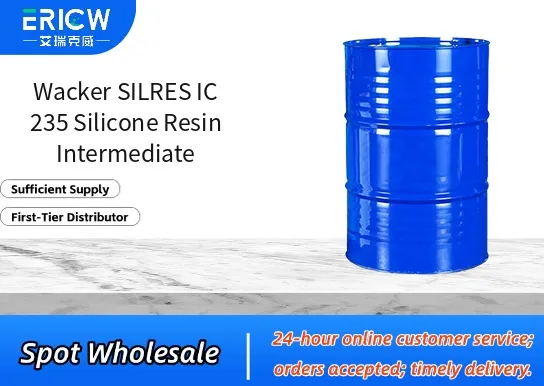
Highly reactive methylphenyl silicone resin with controlled molecular weight distribution for consistent crosslinking performance.
Excellent thermal stability and oxidative resistance, enabling high-temperature curing without significant degradation.
Good compatibility with organic resins (e.g., epoxy, acrylic, polyester) and inorganic fillers for hybrid formulation flexibility.
Solvent-soluble in common aromatic and ketonic solvents, facilitating easy integration into coating and impregnation systems.
Low volatility and minimal volatile organic compound (VOC) contribution during processing and curing.
Heat-resistant coatings for industrial exhaust systems and furnace components.
Electrical insulation varnishes for motors, transformers, and coil impregnation.
Matrix resin in high-performance composite materials for aerospace and energy applications.
Binders for ceramic and refractory fiber mats used in thermal barrier insulation.
Functional additive in flame-retardant intumescent systems for passive fire protection.
| Chemical Type | Methylphenyl silicone resin intermediate |
| Product Form | Clear to slightly hazy liquid |
| Appearance | Colorless to pale yellow, homogeneous liquid |
| Solubility | Soluble in toluene, xylene, MEK, and acetone |
| Reactive Groups | Hydrolyzable methoxy and phenyl groups; residual Si–OH functionality |
| Key Features | Thermally curable, non-ionic, low surface energy |
| Primary Applications | High-temperature coatings, electrical insulation, composite matrices |
| Storage Stability | Stable for ≥12 months at 5–25 °C in sealed containers |
Q1: What is the primary function of SILRES IC 235 in coating and ink formulations?
A: SILRES IC 235 serves as a reactive silicone resin intermediate that enhances surface modification, improves mar resistance, and contributes to controlled hydrophobicity and substrate wetting—particularly in high-performance industrial coatings, overprint varnishes, and specialty inks.
Q2: Is SILRES IC 235 compatible with common organic polymer systems such as acrylics, polyurethanes, or alkyds?
A: Yes, SILRES IC 235 is designed for broad compatibility with thermosetting and thermoplastic resin systems, including acrylics, polyurethanes, and alkyds. Its functional silanol and/or alkoxy groups enable covalent integration or strong physical interaction during curing or film formation.
Q3: How should SILRES IC 235 be incorporated into a formulation?
A: It is typically added during the let-down or post-additive stage under moderate agitation. Pre-dilution in a suitable solvent or carrier resin may improve dispersion. Processing temperature and shear should be controlled to avoid premature condensation or viscosity instability.
Q4: Does SILRES IC 235 require heat curing to achieve full functionality?
A: While ambient condensation occurs slowly, optimal crosslink density and performance benefits—such as enhanced scratch resistance and hydrophobic character—are realized upon thermal treatment, typically within standard industrial curing schedules (e.g., 120–160 °C for several minutes).
Contact With Us:
E-mail: wangxingqiang@ericwchem.com
Have a Questions? Call Us:
Add:
Building A1, Jiete Industrial Park, Huangpu District, Guangzhou City, Guangdong Province, China