English
 Español
 tiếng việt
 русский
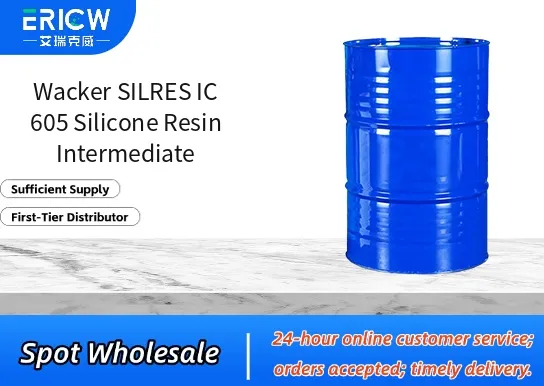
Highly reactive methylphenyl silicone resin with controlled functionality for tailored crosslinking.
Excellent thermal stability and oxidative resistance up to 250 °C in cured state.
Soluble in common organic solvents including xylene, toluene, and MEK for easy formulation integration.
Provides superior hardness, chemical resistance, and weatherability in hybrid organic-inorganic coatings.
Enables low-VOC formulations due to high solids content and minimal solvent requirement.
Heat-resistant coatings for industrial exhaust systems and oven interiors.
High-performance topcoats for architectural metal façades and cladding panels.
Hybrid binders in ceramic and refractory coatings for aerospace and energy equipment.
Matrix resin in silicone-modified alkyd and acrylic hybrid paints.
Functional additive in flame-retardant intumescent systems.
| Chemical Type | Methylphenyl silicone resin (hydrolyzable alkoxysilane functional) |
| Product Form | Liquid |
| Appearance | Clear, colorless to pale yellow viscous liquid |
| Solids Content | ~80–85 wt% (in xylene) |
| Viscosity (25 °C) | 1,500–3,000 mPa·s |
| Density (20 °C) | 0.98–1.02 g/cm³ |
| Volatile Organic Compounds (VOC) | <100 g/L (as per EU Directive 2004/42/EC) |
| Primary Applications | Heat-resistant coatings, hybrid binders, protective topcoats |
Q1: What is the primary function of SILRES IC 605 in coating and ink formulations?
A: SILRES IC 605 serves as a reactive silicone resin intermediate that enhances surface modification, improves substrate wetting, and contributes to mar resistance and slip characteristics in solvent-based and high-solids coatings, as well as in gravure and flexographic inks.
Q2: Is SILRES IC 605 compatible with common organic resins and polymer systems?
A: Yes — it exhibits good compatibility with acrylics, polyesters, alkyds, and cellulose derivatives. Its reactive silanol groups allow for covalent integration into thermosetting systems during curing, supporting stable formulation performance without phase separation.
Q3: How should SILRES IC 605 be incorporated into a formulation to ensure optimal performance?
A: It is typically added during the let-down or post-additive stage under moderate agitation. Pre-dilution in a compatible solvent (e.g., xylene, butyl acetate, or ethyl acetate) is recommended to ensure uniform dispersion. Avoid prolonged high-shear mixing after addition to preserve its reactive functionality.
Q4: Does SILRES IC 605 require heat curing to achieve full functionality?
A: While it can provide some benefit at ambient conditions, full crosslinking and optimal surface property development generally occur during thermal curing—typically above 120 °C—enabling condensation reactions between its silanol groups and other reactive components in the system.
Q5: Can SILRES IC 605 be used in food-contact compliant coatings?
A: SILRES IC 605 is not intended for direct food-contact applications unless fully validated within a specific finished formulation and cured system. Regulatory compliance depends on final product testing, migration behavior, and adherence to applicable regional requirements—formulators must conduct their own due diligence and verification.
Contact With Us:
E-mail: wangxingqiang@ericwchem.com
Have a Questions? Call Us:
Add:
Building A1, Jiete Industrial Park, Huangpu District, Guangzhou City, Guangdong Province, China