English
 Español
 tiếng việt
 русский
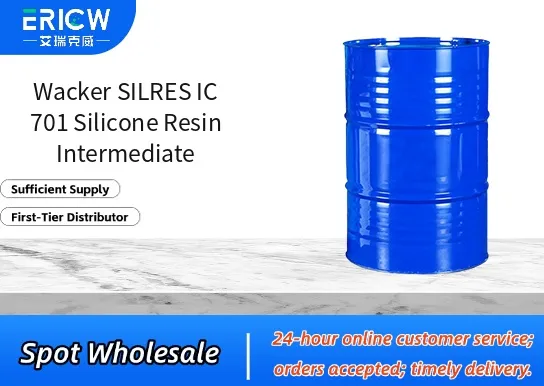
Highly reactive methylphenylsilicone resin precursor with controlled functionality for tailored crosslinking.
Excellent thermal stability and oxidative resistance for demanding high-temperature processing environments.
Low viscosity in solvent solution, enabling easy handling, blending, and compatibility with organic resins.
Designed for further modification—ideal for synthesizing custom silicone-modified polymers and hybrid binders.
Consistent batch-to-batch reproducibility meeting WACKER’s stringent quality control standards.
Formulation of heat-resistant coatings for industrial exhaust systems and furnace linings.
Key intermediate in manufacturing silicone-modified alkyd and acrylic resins for premium architectural and industrial paints.
Component in high-performance release coatings for technical papers and composite mold liners.
Base material for developing flame-retardant impregnation resins used in electrical insulation laminates.
Functional additive in specialty adhesives requiring enhanced thermal and weathering resistance.
| Chemical Type | Methylphenylsilicone resin intermediate (hydrolyzable alkoxysilane functional) |
| Product Form | Liquid in aromatic hydrocarbon solvent (e.g., xylene) |
| Appearance | Clear, colorless to pale yellow liquid |
| Primary Applications | Silicone resin synthesis, hybrid binder development, high-temperature coating formulations |
| Key Features | Reactive silanol/alkoxy groups, low volatility, good solubility in common organic solvents |
| Benefits | Enables co-crosslinking with organic polymers; improves thermal stability, hardness, and chemical resistance |
| Storage Condition | Store in tightly closed containers at 5–30 °C, protected from moisture and direct sunlight |
| Shelf Life | 12 months from date of manufacture under recommended storage conditions |
Q1: What is the primary function of SILRES IC 701 in coating and ink formulations?
A: SILRES IC 701 serves as a reactive silicone resin intermediate that imparts improved substrate wetting, leveling, and surface slip—while maintaining compatibility with organic polymer systems. It enhances film uniformity and contributes to reduced surface tension without significantly compromising crosslink density or hardness.
Q2: Is SILRES IC 701 compatible with common solvent-based and high-solids resin systems?
A: Yes, SILRES IC 701 exhibits broad compatibility with acrylics, polyesters, alkyds, and epoxy resins in both solvent-borne and high-solids systems. Its tailored siloxane backbone and functional organic groups support homogeneous dispersion and co-reactivity during cure.
Q3: How should SILRES IC 701 be incorporated into a formulation?
A: It is typically added during the let-down or post-additive stage under moderate agitation. Pre-dilution in a compatible solvent or carrier resin is recommended for optimal dispersion. Avoid high-shear mixing at elevated temperatures prior to full formulation integration.
Q4: Does SILRES IC 701 require heat or catalyst activation to react within a coating matrix?
A: SILRES IC 701 contains hydrolyzable alkoxy silane groups that can undergo condensation reactions during thermal curing or ambient moisture exposure. While it contributes to network formation, full reactivity depends on system pH, humidity, and the presence of catalytic species such as tin or titanium compounds.
Contact With Us:
E-mail: wangxingqiang@ericwchem.com
Have a Questions? Call Us:
Add:
Building A1, Jiete Industrial Park, Huangpu District, Guangzhou City, Guangdong Province, China