English
 Español
 tiếng việt
 русский
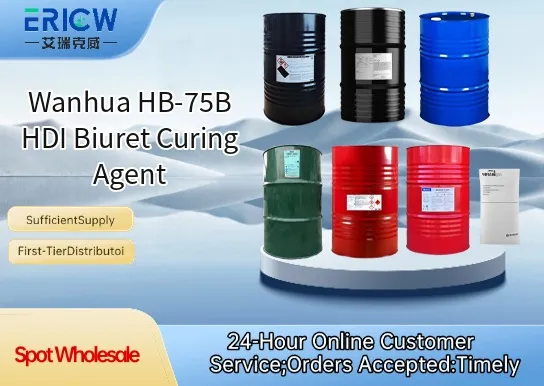
Low-viscosity liquid formulation enabling excellent processability and easy handling in industrial coating systems.
Excellent chemical resistance and weathering stability, particularly against UV exposure and moisture.
Good compatibility with common hydroxyl-functional resins including polyester, acrylic, and polyether polyols.
Fast ambient-cure capability with balanced pot life for efficient production line integration.
Low free HDI monomer content (< 0.5%), meeting stringent occupational health and safety requirements.
Automotive OEM and refinish clearcoats and basecoats.
Industrial maintenance coatings for metal and plastic substrates.
High-performance wood finishes requiring durability and gloss retention.
Plastic coatings for electronics housings and automotive interior parts.
General-purpose two-component polyurethane topcoats in architectural and agricultural equipment sectors.
| Chemical Type | HDI-based biuret oligomer |
| Product Form | Clear, colorless to pale yellow liquid |
| Appearance | Homogeneous, transparent liquid |
| NCO Content (wt%) | 21.0 – 22.5% |
| Viscosity at 25°C (mPa·s) | 1,800 – 2,500 |
| Density at 25°C (g/cm³) | 1.18 – 1.22 |
| Free HDI Monomer (wt%) | ≤ 0.5% |
| Primary Applications | 2K PU coatings requiring low viscosity and high durability |
Q1: What is the primary chemical composition and structural characteristic of HB-75B?
A: Wanhua HB-75B is a biuret-type aliphatic polyisocyanate derived from hexamethylene diisocyanate (HDI), featuring a low-viscosity, trifunctional structure with enhanced steric stability and reduced volatility compared to HDI monomer or trimer variants.
Q2: How does HB-75B compare to HDI trimers in terms of reactivity and film properties?
A: HB-75B exhibits moderate reactivity—slower than most HDI trimers but faster than HDI isocyanurates—offering balanced pot life and cure speed. It typically delivers excellent gloss retention, UV resistance, and mechanical flexibility in final coatings, especially where long-term color stability is critical.
Q3: What types of resins is HB-75B commonly formulated with?
A: HB-75B is widely compatible with hydroxyl-functional acrylics, polyesters, and alkyds in two-component polyurethane systems. It is especially suited for high-performance industrial and automotive clearcoats, as well as durable topcoats requiring low yellowing and good chemical resistance.
Q4: What are key handling and storage recommendations for HB-75B?
A: Store in tightly sealed containers under dry, cool conditions (below 30 °C) and protect from moisture, heat, and direct sunlight. Avoid prolonged exposure to ambient humidity during handling, as it may lead to gelation or CO₂ evolution. Use appropriate personal protective equipment when dispensing or mixing.
Q5: Is HB-75B suitable for low-VOC or high-solids coating formulations?
A: Yes—HB-75B’s relatively low viscosity and high NCO content enable formulators to achieve high-solids systems without excessive solvent addition. It supports VOC-compliant formulations when paired with low-VOC resins and solvents, though final compliance depends on the full formulation and regional regulatory requirements.
Contact With Us:
E-mail: wangxingqiang@ericwchem.com
Have a Questions? Call Us:
Add:
Building A1, Jiete Industrial Park, Huangpu District, Guangzhou City, Guangdong Province, China