English
 Español
 tiếng việt
 русский
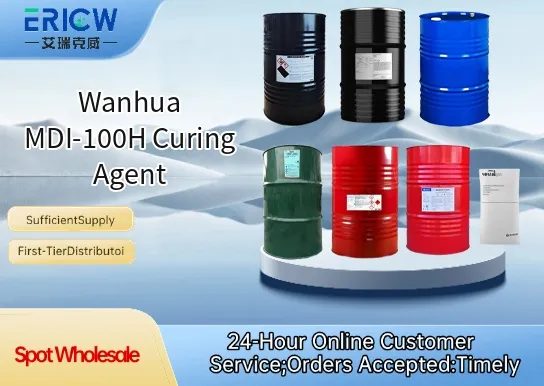
High reactivity with polyols, enabling rapid gelation and efficient production cycle times.
Excellent hydrolytic stability due to low monomeric MDI content and controlled oligomer distribution.
Consistent viscosity and narrow molecular weight distribution for precise process control in metering & mixing systems.
Low volatility and reduced vapor pressure, enhancing workplace safety and minimizing handling hazards.
Compatible with a broad range of polyester and polyether polyols, offering formulation flexibility.
Automotive interior trim components, including instrument panels and door claddings.
Flexible and semi-rigid polyurethane foams for seating, headrests, and dashboard padding.
Reaction injection molding (RIM) and structural reaction injection molding (SRIM) parts.
High-performance elastomers for industrial rollers, seals, and vibration-damping mounts.
Adhesives and sealants requiring fast build-up of green strength and thermal resistance.
| Chemical Type | Modified diphenylmethane diisocyanate (MDI)-based prepolymer |
| Product Form | Liquid |
| Appearance | Clear to pale yellow transparent liquid |
| Primary Applications | RIM, SRIM, flexible/semi-rigid foams, elastomers, adhesives |
| Key Features | Fast reactivity, low monomer content, high hydrolytic stability |
| Benefits | Improved processing safety, consistent part quality, reduced cycle time |
| Storage Condition | Store under dry nitrogen at 15–25°C; protect from moisture and direct sunlight |
| Shelf Life | 12 months from date of manufacture when stored properly |
Q1: What is the primary function of Wanhua MDI-100H Curing Agent in polyurethane systems?
A: Wanhua MDI-100H is a low-viscosity, aliphatic polyisocyanate-based curing agent designed to react with hydroxyl-functional resins (e.g., polyols, acrylics, or polyester polyols) to form crosslinked polyurethane networks. It enables enhanced hardness, chemical resistance, and weatherability in two-component coatings and adhesives.
Q2: Is MDI-100H compatible with waterborne polyol systems?
A: Yes — MDI-100H exhibits good compatibility with many waterborne hydroxyl-containing dispersions when properly formulated. Due to its low NCO content and controlled reactivity, it supports stable mixing and extended pot life in ambient-cure waterborne PU systems, though formulation optimization (e.g., co-solvent selection, pH control) is recommended for best performance.
Q3: How does MDI-100H compare to aromatic isocyanate curing agents in terms of yellowing resistance?
A: As an aliphatic curing agent, MDI-100H delivers significantly improved UV stability and non-yellowing performance compared to aromatic alternatives (e.g., TDI- or MDI-based aromatic hardeners), making it suitable for topcoats and clear finishes where long-term gloss retention and color stability are critical.
Q4: What are typical handling and storage recommendations for MDI-100H?
A: Store in tightly sealed containers under dry, cool conditions (preferably below 30 °C) and protect from moisture, heat, and direct sunlight. Avoid prolonged exposure to ambient humidity during handling, as isocyanates react readily with water. Use appropriate personal protective equipment (PPE), including nitrile gloves and respiratory protection when aerosols or vapors may be present.
Contact With Us:
E-mail: wangxingqiang@ericwchem.com
Have a Questions? Call Us:
Add:
Building A1, Jiete Industrial Park, Huangpu District, Guangzhou City, Guangdong Province, China