English
 Español
 tiếng việt
 русский
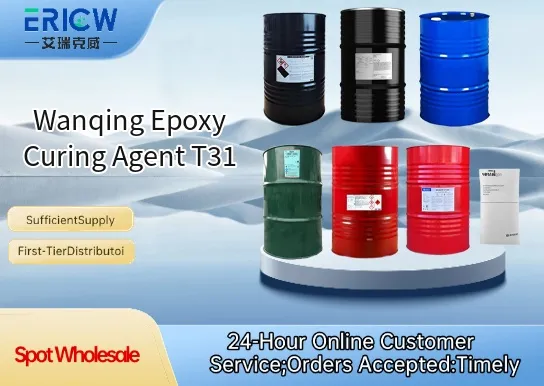
Fast ambient-cure capability at room temperature without external heat input.
Excellent adhesion to diverse substrates including metals, concrete, and composites.
Low viscosity for easy mixing and improved epoxy resin compatibility.
Good chemical resistance against alkalis, solvents, and mild acids after full cure.
Low toxicity profile with no added formaldehyde or heavy-metal catalysts.
Structural adhesive formulations for automotive assembly and repair.
Protective coatings for industrial flooring and concrete surface renovation.
Electrical potting and encapsulation in power electronics and transformers.
Repair mortars and grouts for civil engineering infrastructure maintenance.
Composite matrix systems in wind blade bonding and marine component manufacturing.
| Chemical Type | Amine-based modified polyamide |
| Product Form | Liquid |
| Appearance | Amber to light brown transparent liquid |
| Viscosity (25°C) | 300–600 mPa·s |
| Active Hydrogen Equivalent Weight | 180–210 g/eq |
| Specific Gravity (25°C) | 0.98–1.02 |
| pH (10% aqueous solution) | 10.2–11.0 |
| Shelf Life (unopened, 25°C) | 12 months |
Q1: What is the primary chemical nature of T31 curing agent?
A: T31 is a modified amine-based epoxy curing agent, formulated to provide balanced reactivity, reduced volatility, and improved compatibility with standard bisphenol-A and bisphenol-F epoxy resins.
Q2: How does T31 perform in low-temperature curing applications?
A: T31 enables effective epoxy curing at ambient and moderately low temperatures (down to approximately 10–15 °C), making it suitable for field applications where heated ovens are impractical—though full property development may require extended post-cure time.
Q3: Is T31 compatible with common epoxy diluents and fillers?
A: Yes—T31 demonstrates good miscibility with reactive and non-reactive epoxy diluents (e.g., glycidyl ethers), as well as compatibility with typical inorganic fillers such as silica, calcium carbonate, and aluminum trihydrate, without significant phase separation or viscosity instability.
Q4: What safety considerations apply during handling and storage?
A: As with most amine curing agents, T31 may cause skin and eye irritation. Users should wear appropriate PPE—including nitrile gloves, safety goggles, and adequate ventilation—and store in tightly sealed containers away from moisture and direct sunlight to maintain stability.
Contact With Us:
E-mail: wangxingqiang@ericwchem.com
Have a Questions? Call Us:
Add:
Building A1, Jiete Industrial Park, Huangpu District, Guangzhou City, Guangdong Province, China