English
 Español
 tiếng việt
 русский
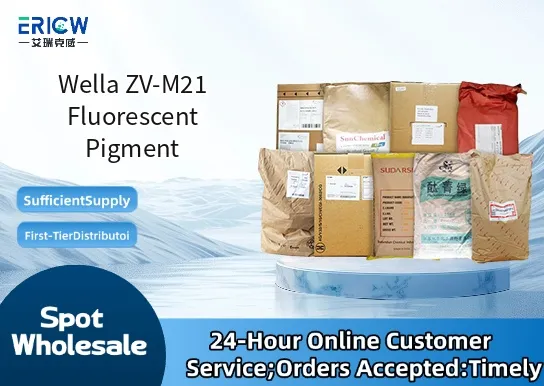
High-intensity fluorescence under UV-A (365 nm) and daylight illumination.
Excellent thermal stability up to 220°C, suitable for medium-temperature processing.
Good dispersibility in both polar and non-polar organic media, including acrylics, polyesters, and PVC.
Low migration tendency in polymer matrices, ensuring long-term color fidelity and regulatory compliance.
Non-hazardous formulation compliant with REACH Annex XIV exclusion criteria and RoHS 2.0 directives.
Security printing inks for banknotes, certificates, and tax stamps.
High-visibility safety signage and emergency egress markings.
Specialty coatings for automotive interior trim and instrument dials.
Fluorescent masterbatches for injection-molded plastic components.
UV-responsive decorative films and laminates for architectural glazing.
| Chemical Type | Organic fluorescent dye dispersed in polymeric carrier |
| Product Form | Free-flowing granular concentrate |
| Appearance | Yellowish-green granules (dry state), intense green-yellow fluorescence when activated |
| Primary Applications | Polymer coloring, security inks, functional coatings, specialty films |
| Key Features | UV-stable, thermally robust, low volatility, non-bleeding |
| Benefits | Consistent batch-to-batch performance, easy dosing, no pre-drying required |
| Storage Conditions | Keep sealed in original packaging at 15–25°C, protect from humidity and direct sunlight |
| Shelf Life | 24 months from date of manufacture under recommended storage |
Q1: What types of resin systems is Wella ZV-M21 compatible with?
A: Wella ZV-M21 exhibits good compatibility with a broad range of thermoplastic and thermosetting systems, including ABS, PS, PVC, PMMA, and unsaturated polyesters. Compatibility should always be verified in the final formulation due to potential interactions with additives or processing conditions.
Q2: How does thermal stability affect the performance of Wella ZV-M21 during processing?
A: Wella ZV-M21 is engineered for enhanced thermal stability and retains its fluorescent intensity under standard polymer processing temperatures. Prolonged exposure above 220 °C—especially in high-shear or oxygen-rich environments—may lead to gradual fluorescence attenuation; therefore, optimized processing parameters are recommended.
Q3: Can Wella ZV-M21 be used in applications requiring UV resistance?
A: While Wella ZV-M21 delivers strong initial fluorescence under UV excitation, prolonged direct UV exposure may result in photofading over time. For outdoor or long-term UV-exposed applications, co-stabilization with appropriate UV absorbers or HALS is advised to extend functional lifetime.
Q4: What is the typical dosage range for achieving optimal fluorescence in plastic masterbatches?
A: Dosage depends on the base polymer, desired brightness level, and final part thickness. Wella ZV-M21 is typically used at low concentrations—generally ranging from 0.1% to 2% by weight in masterbatch formulations—to balance cost-efficiency, dispersion quality, and fluorescence output.
Contact With Us:
E-mail: wangxingqiang@ericwchem.com
Have a Questions? Call Us:
Add:
Building A1, Jiete Industrial Park, Huangpu District, Guangzhou City, Guangdong Province, China