English
 Español
 tiếng việt
 русский
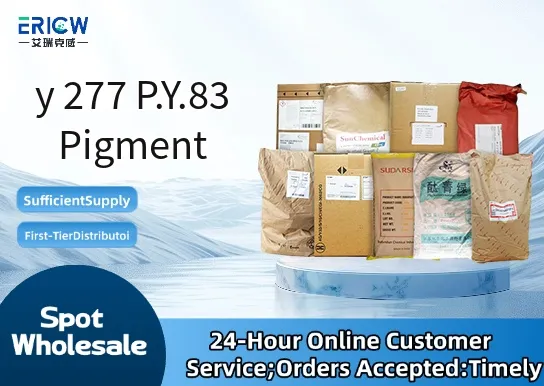
High chroma yellow shade with excellent lightfastness (ISO 105-B02, Grade 7–8)
Good thermal stability up to 220°C, suitable for high-temperature processing
Outstanding dispersibility in both polar and non-polar polymer systems
Low volatility and negligible migration in PVC and polyolefin applications
Compliant with major global regulatory frameworks including REACH and RoHS
Automotive interior plastics (dashboards, trim components)
General-purpose industrial coatings and coil coatings
Masterbatch for HDPE, PP, and ABS injection molding
Food-contact compliant packaging films (subject to local regulatory approval)
Architectural and decorative PVC profiles and window frames
| Chemical Type | Organic Azo Pigment (Pigment Yellow 83) |
| Product Form | Fine free-flowing powder |
| Appearance | Bright greenish-yellow powder |
| Primary Applications | Plastics, coatings, inks |
| Key Features | High opacity, excellent weather resistance, low dusting |
| Benefits | Consistent batch-to-batch color match, minimal filter clogging in extrusion |
| Density | 1.45 g/cm³ (typical) |
| Volatile Matter (105°C, 2 h) | ≤ 0.5 wt% |
Q1: What is the primary chemical class and typical application field for y 277 P.Y.83 Pigment?
A: y 277 P.Y.83 is an organic monoazo pigment classified under the PY.83 series, widely used for its bright yellow shade and good lightfastness in high-performance industrial coatings, plastics, and specialty inks where color strength and thermal stability are critical.
Q2: Is y 277 P.Y.83 suitable for food-contact or pharmaceutical applications?
A: This pigment is not pre-approved for direct food-contact or pharmaceutical use. It may be considered for indirect applications—such as external packaging coatings—subject to full regulatory review and compliance verification by the end-user’s formulation team and relevant authorities.
Q3: How does y 277 P.Y.83 perform under elevated processing temperatures?
A: The pigment demonstrates good thermal stability and is generally compatible with standard plastic processing conditions up to approximately 220–240 °C, making it suitable for polyolefins, PS, ABS, and many engineering thermoplastics without significant hue shift or decomposition.
Q4: What dispersion methods are recommended for optimal color development in solvent-based systems?
A: For solvent-based coatings and inks, high-shear dispersion using suitable wetting agents and dispersants—followed by milling (e.g., bead or pearl mill)—is strongly recommended to achieve full color strength, gloss, and batch-to-batch consistency.
Q5: Can y 277 P.Y.83 be safely mixed with other organic pigments or inorganic colorants?
A: Yes, y 277 P.Y.83 shows good compatibility with most common organic pigments and selected inorganic colorants; however, compatibility testing—including heat stability, migration behavior, and color interaction—is advised prior to large-scale co-pigmentation to ensure no adverse interactions occur.
Contact With Us:
E-mail: wangxingqiang@ericwchem.com
Have a Questions? Call Us:
Add:
Building A1, Jiete Industrial Park, Huangpu District, Guangzhou City, Guangdong Province, China