English
 Español
 tiếng việt
 русский
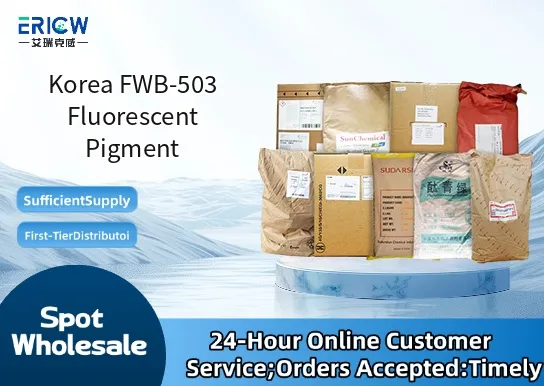
High-intensity fluorescence under UV-A (365 nm) and daylight conditions.
Excellent thermal stability up to 220°C, suitable for high-temperature processing.
Good compatibility with common organic resins including ABS, PS, and PVC.
Low migration tendency in polymer matrices, ensuring long-term color fidelity.
Non-hazardous formulation compliant with REACH and RoHS directives.
Security printing in banknotes, passports, and tax stamps.
Fluorescent marking in industrial safety signage and PPE.
UV-responsive inks for packaging authentication and anti-counterfeiting.
Special-effect masterbatches for automotive interior trim and consumer electronics housings.
Fluorescent coatings for outdoor advertising and architectural accents.
| Chemical Type | Dispersed organic fluorescent dye derivative |
| Product Form | Free-flowing fine powder |
| Appearance | Yellow-orange dry powder with uniform particle distribution |
| Primary Applications | Polymer coloring, security inks, functional coatings |
| Key Features | UV-excitable, thermally stable, non-metallic, low volatility |
| Benefits | Enhanced visibility, regulatory compliance, easy dispersion, batch consistency |
| Storage Conditions | Keep sealed in cool, dry place away from direct sunlight |
| Shelf Life | 24 months from date of manufacture under recommended storage |
Q1: What types of resins and polymers is FWB-503 compatible with?
A: FWB-503 demonstrates good compatibility with a broad range of thermoplastic and thermosetting systems, including ABS, PS, PVC, acrylics, polyesters, and epoxy-based coatings. Performance may vary depending on resin polarity and processing temperature—preliminary compatibility testing is recommended for critical applications.
Q2: How does FWB-503 perform under UV exposure and outdoor weathering?
A: As a fluorescent pigment, FWB-503 delivers strong chromatic intensity under UV-A (365 nm) illumination. However, its long-term photostability in direct sunlight is moderate; for extended outdoor use, co-stabilization with UV absorbers and HALS is advised to maintain fluorescence brightness and minimize fading.
Q3: Is FWB-503 suitable for food-contact or pharmaceutical packaging applications?
A: FWB-503 is not certified for direct food-contact or pharmaceutical use. It is intended for decorative, industrial, and non-regulated functional applications where regulatory compliance is not required. Customers requiring food-grade approval must consult applicable regional regulations and pursue formal certification separately.
Q4: What is the typical dosage range for achieving optimal fluorescence effect?
A: Optimal loading generally ranges from 0.1% to 2% by weight relative to the base system, depending on desired intensity, substrate opacity, and application method. Lower concentrations often suffice in transparent media, while higher loadings may be needed in opaque or highly pigmented formulations. Dispersion quality significantly influences final performance.
Contact With Us:
E-mail: wangxingqiang@ericwchem.com
Have a Questions? Call Us:
Add:
Building A1, Jiete Industrial Park, Huangpu District, Guangzhou City, Guangdong Province, China