English
 Español
 tiếng việt
 русский
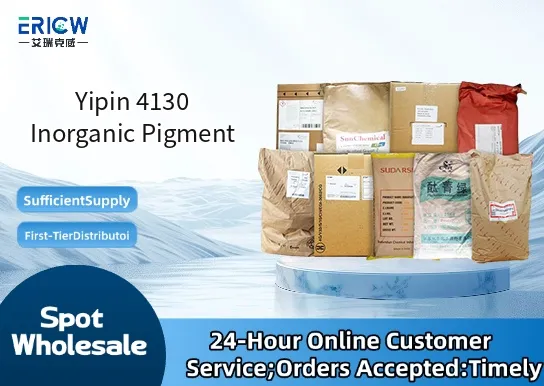
High thermal stability up to 800 °C, retaining color integrity under prolonged high-temperature processing.
Excellent lightfastness and weather resistance, meeting ISO 105-B02 (≥7 rating) for outdoor durability.
Non-toxic and heavy-metal-free formulation compliant with EN 71-3 and RoHS directives.
Superior dispersion stability in aqueous and solvent-based systems without requiring surface treatment.
Consistent particle size distribution (D50 ≈ 0.8–1.2 µm), ensuring uniform tinting strength and low abrasivity.
Ceramic glazes and underglaze decorations for tableware and architectural tiles.
High-performance refractory coatings used in furnace linings and kiln furniture.
Colorants for inorganic binders in fire-resistant building materials and intumescent paints.
Pigmentation of specialty glass batches, including borosilicate and low-expansion glass types.
Functional coloring agent in thermally stable polymer composites (e.g., polyimide and silicone elastomers).
| Chemical Type | Mixed metal oxide (Fe-Cr-Ni spinel structure) |
| Product Form | Fine dry powder |
| Appearance | Uniform dark green to black granular powder |
| Primary Applications | Ceramics, refractories, specialty glass, high-temp coatings |
| Key Features | Thermal stability, chemical inertness, UV resistance, non-volatile |
| Benefits | No blooming or migration; compatible with alkaline and acidic matrices |
| pH Stability Range | 4–12 (aqueous suspension) |
| Storage Conditions | Keep in dry, cool, ventilated area; avoid moisture absorption |
Q1: What is the primary chemical composition of Yipin 4130?
A: Yipin 4130 is a high-performance inorganic pigment based on a stabilized mixed-metal oxide system, engineered for exceptional thermal and chemical resistance. Its exact formulation is proprietary, but it contains no heavy metals such as lead, cadmium, or mercury, and complies with global regulatory expectations for restricted substances in industrial pigments.
Q2: Is Yipin 4130 suitable for high-temperature applications like ceramic glazes or thermoset plastics?
A: Yes — Yipin 4130 is specifically designed for demanding thermal environments. It retains color integrity and structural stability at temperatures exceeding 800 °C, making it well-suited for ceramic decoration, refractory coatings, and high-heat polymer systems such as polyimides and phenolics.
Q3: How does Yipin 4130 perform under UV exposure and weathering conditions?
A: As an inorganic oxide pigment, Yipin 4130 exhibits outstanding lightfastness and weather resistance. It shows negligible fading or chalking after prolonged UV exposure and is widely used in exterior architectural coatings and durable outdoor composites where long-term color retention is critical.
Q4: Can Yipin 4130 be dispersed in both aqueous and solvent-based systems?
A: Yes — Yipin 4130 is compatible with a broad range of dispersing media. With appropriate surfactants or grinding aids, it achieves stable dispersion in water-based emulsions, alkyd resins, epoxy formulations, and polar organic solvents. Optimal dispersion typically requires high-shear mixing or bead milling.
Q5: What is the typical dosage range when using Yipin 4130 in coating or plastic applications?
A: Dosage depends on the desired opacity, hue strength, and substrate requirements, but Yipin 4130 is generally used at low concentrations — typically ranging from 0.1% to 2% by weight in final formulations. Its high tinting strength allows efficient color development without compromising matrix properties.
Contact With Us:
E-mail: wangxingqiang@ericwchem.com
Have a Questions? Call Us:
Add:
Building A1, Jiete Industrial Park, Huangpu District, Guangzhou City, Guangdong Province, China