English
 Español
 tiếng việt
 русский
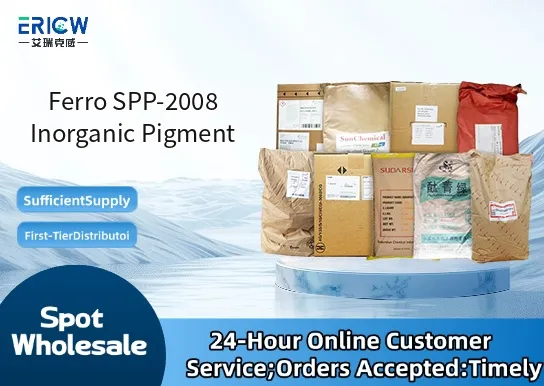
High thermal stability up to 1000°C, suitable for high-temperature ceramic and glaze applications.
Excellent lightfastness and UV resistance, ensuring long-term color retention in outdoor exposure.
Chemically inert in acidic and alkaline environments, enhancing compatibility with diverse binder systems.
Fine particle size distribution (D50 ≈ 0.8–1.2 µm) enabling uniform dispersion and optimal opacity.
Non-toxic and heavy-metal-free formulation compliant with global regulatory standards including EN 71-3 and RoHS.
Ceramic glazes and underglaze decorations for tableware and architectural tiles.
High-performance coatings for industrial equipment and automotive heat-resistant components.
Colorants in refractory materials such as furnace linings and kiln furniture.
Pigmentation of glass enamels and frits used in appliance and decorative glass manufacturing.
Stabilized colorant in polymer composites requiring elevated processing temperatures.
| Chemical Type | Mixed-metal oxide (chromium-iron spinel) |
| Product Form | Free-flowing dry powder |
| Appearance | Dark green to black granular powder |
| Primary Applications | Ceramics, refractories, high-temp coatings, glass enamels |
| Key Features | Thermal stability, chemical inertness, non-volatility, low water solubility |
| Benefits | Consistent batch-to-batch color, minimal sintering distortion, low abrasivity |
| Storage Conditions | Store in cool, dry, well-ventilated area; protect from moisture and contamination |
| Regulatory Compliance | REACH registered; compliant with FDA 21 CFR §178.3297 for indirect food contact applications |
Q1: What is the primary chemical composition of Ferro SPP-2008?
A: Ferro SPP-2008 is a high-performance inorganic pigment based on a complex metal oxide system, engineered for thermal and chemical stability. Its exact composition is proprietary to Ferro Corporation and optimized for consistent color development and dispersion behavior in demanding polymer systems.
Q2: Is SPP-2008 suitable for food-contact plastics?
A: Ferro SPP-2008 is designed for use in applications where regulatory compliance is required, including certain food-contact plastic formulations. End-use compliance depends on the final formulation, processing conditions, and applicable regional regulations — users must conduct full regulatory validation as part of their qualification process.
Q3: How does SPP-2008 perform under high-temperature processing?
A: This pigment exhibits excellent thermal stability and retains its color integrity during standard polymer processing—including injection molding, extrusion, and blow molding—at temperatures commonly encountered in polyolefins, engineering thermoplastics, and thermosets.
Q4: What is the recommended method for dispersing SPP-2008 in polymer melts?
A: Optimal dispersion is typically achieved using conventional compounding equipment such as twin-screw extruders. Pre-blending with carrier resin or masterbatch dilution is advised to ensure uniform distribution and minimize agglomeration. Processing parameters should be adjusted to balance shear input and thermal exposure.
Q5: Can SPP-2008 be used in UV-stabilized outdoor applications?
A: Yes — SPP-2008 demonstrates strong resistance to UV-induced fading and weathering when incorporated into properly stabilized polymer systems, making it suitable for long-term outdoor applications such as automotive exterior parts and construction profiles.
Contact With Us:
E-mail: wangxingqiang@ericwchem.com
Have a Questions? Call Us:
Add:
Building A1, Jiete Industrial Park, Huangpu District, Guangzhou City, Guangdong Province, China