English
 Español
 tiếng việt
 русский
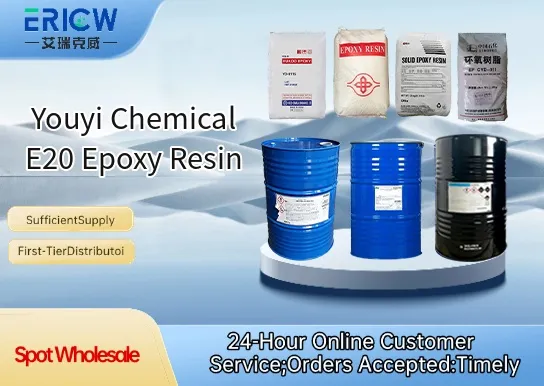
High purity bisphenol-A based liquid epoxy resin with consistent molecular weight distribution.
Excellent adhesion to metals, composites, and cured polymer substrates.
Low viscosity (12,000–14,000 cP at 25°C) enabling easy processing and impregnation.
Superior thermal stability with glass transition temperature (Tg) of cured system ≥125°C.
Low chloride content (<700 ppm), ensuring enhanced electrical insulation and corrosion resistance.
Electrical encapsulation and potting compounds for transformers and sensors.
Structural adhesives in automotive and aerospace composite bonding.
High-performance coatings for marine and industrial steel protection.
Matrix resin for filament-wound pressure vessels and pultruded profiles.
Base resin for flame-retardant printed circuit board (PCB) laminates.
| Chemical Type | Bisphenol-A epoxy resin |
| Product Form | Clear, low-viscosity liquid |
| Appearance | Pale yellow to water-white, transparent |
| Epoxy Equivalent Weight (EEW) | 185–192 g/eq |
| Viscosity (25°C) | 12,000–14,000 cP |
| Chloride Content | <700 ppm |
| Volatiles Content | <0.3 wt% |
| Storage Stability | 12 months at <25°C in sealed containers |
Q1: What is the typical application profile of Youyi Chemical E20 Epoxy Resin?
A: E20 is a liquid bisphenol-A based epoxy resin designed primarily for use in high-performance protective coatings, electrical encapsulation, and structural adhesives where balanced reactivity, good mechanical strength, and chemical resistance are required.
Q2: How does E20 compare to standard DGEBA resins in terms of viscosity and handling?
A: E20 exhibits lower viscosity than conventional solid or high-molecular-weight DGEBA resins, enabling easier processing at ambient temperature and improved compatibility with fillers, pigments, and reactive diluents without requiring excessive heating.
Q3: Is E20 suitable for formulations requiring FDA-compliant food-contact applications?
A: E20 is not pre-certified for direct food-contact use. Formulators must validate final cured systems against applicable regulatory requirements, as compliance depends on full formulation, cure conditions, and intended exposure scenario.
Q4: What types of curing agents are commonly used with E20?
A: E20 is compatible with a broad range of amine-based hardeners (aliphatic, cycloaliphatic, and aromatic), anhydrides, and catalytic systems. Selection depends on desired pot life, cure schedule, and end-use performance requirements such as thermal stability or flexibility.
Q5: Can E20 be blended with other resins to modify performance?
A: Yes — E20 is frequently blended with flexibilizers, novolac epoxies, or bio-based epoxy modifiers to tailor crosslink density, toughness, or thermal performance, though compatibility and phase behavior should be verified experimentally for each specific blend.
Contact With Us:
E-mail: wangxingqiang@ericwchem.com
Have a Questions? Call Us:
Add:
Building A1, Jiete Industrial Park, Huangpu District, Guangzhou City, Guangdong Province, China