English
 Español
 tiếng việt
 русский
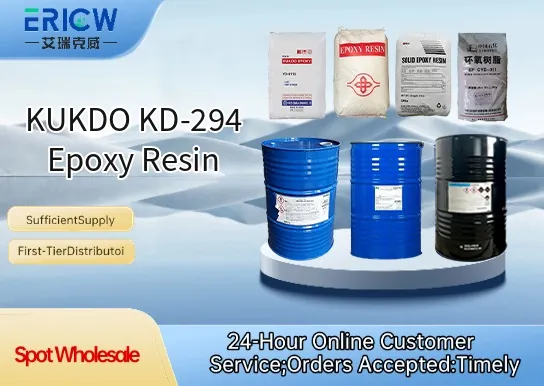
High reactivity with standard amine and anhydride curing agents for rapid gelation and short cycle times.
Excellent adhesion to metals, composites, and treated plastics under ambient and elevated temperature conditions.
Low viscosity (12,000–15,000 cP at 25°C) enabling easy processing, impregnation, and bubble-free casting.
Superior chemical resistance to alkalis, diluted acids, and common solvents after full cure.
Low volatile organic compound (VOC) content, supporting compliance with industrial environmental and safety standards.
Electrical insulation systems for transformers, reactors, and high-voltage encapsulation.
Structural adhesives in automotive and rail transportation components.
Matrix resin for fiber-reinforced composites used in wind turbine blades and marine laminates.
Casting and potting compounds for power electronics and LED modules.
Coating binders for corrosion-resistant industrial floor and tank linings.
| Chemical Type | Bisphenol-A based liquid epoxy resin |
| Product Form | Clear to pale yellow viscous liquid |
| Appearance | Transparent, slightly yellow, homogeneous |
| Epoxy Equivalent Weight (EEW) | 185–192 g/eq |
| Viscosity (25°C) | 12,000–15,000 cP |
| Chlorine Content | ≤ 700 ppm |
| Softening Point | Not applicable (liquid at room temperature) |
| Storage Stability | 12 months at <25°C in sealed original container |
Q1: What is the primary functional role of KD-294 in epoxy formulations?
A: KD-294 is a reactive liquid epoxy resin modifier designed to reduce system viscosity, improve flexibility, and enhance compatibility with various curing agents—without significantly compromising thermal stability or chemical resistance.
Q2: Is KD-294 suitable for use in high-gloss coatings or electrical encapsulation applications?
A: Yes—its low volatility, good hydrolytic stability, and ability to yield clear, bubble-free films make it well-suited for high-performance coating systems and electrical insulation applications where clarity, adhesion, and dielectric integrity are critical.
Q3: How does KD-294 compare to conventional bisphenol-A epoxy resins in terms of reactivity?
A: KD-294 exhibits moderate reactivity—slightly lower than standard DGEBA resins—allowing for extended pot life and improved processing control, especially in ambient-cure or heat-assisted systems with amine or anhydride hardeners.
Q4: Can KD-294 be blended with other epoxy resins or additives?
A: Yes—it is fully miscible with common solid and liquid epoxy resins (e.g., DGEBA, NOVOLAC, and hydrogenated variants) and compatible with most conventional accelerators, fillers, and flexibilizers used in industrial formulating.
Contact With Us:
E-mail: wangxingqiang@ericwchem.com
Have a Questions? Call Us:
Add:
Building A1, Jiete Industrial Park, Huangpu District, Guangzhou City, Guangdong Province, China