English
 Español
 tiếng việt
 русский
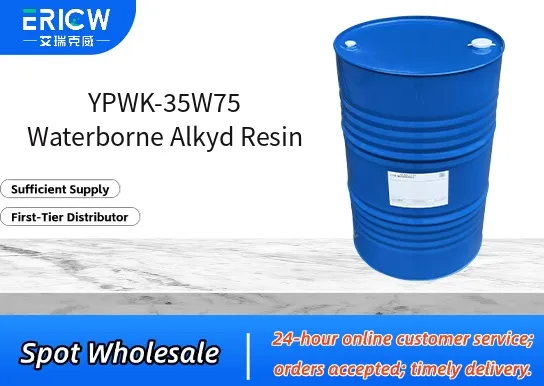
Low-VOC formulation compliant with global environmental regulations including EPA and EU REACH.
Excellent water reducibility with stable viscosity retention up to 30% deionized water addition.
Superior film formation at ambient temperature, enabling fast dry-to-touch and good early hardness development.
Enhanced compatibility with acrylic emulsions, polyurethane dispersions, and common coalescing agents.
Good hydrolytic stability and shelf life ≥12 months at 5–35°C in sealed containers.
Architectural interior and exterior wall paints requiring enhanced durability and gloss retention.
Waterborne industrial maintenance coatings for metal substrates (e.g., railcars, agricultural equipment).
High-performance wood finishes for furniture, cabinetry, and flooring where low odor and rapid recoatability are critical.
Hybrid waterborne coatings combining alkyd toughness with acrylic weather resistance.
Refinish coatings for OEM-adjacent applications demanding balanced sandability and chemical resistance.
| Chemical Type | Water-reducible alkyd resin (soy oil-modified) |
| Product Form | Aqueous dispersion |
| Appearance | Translucent amber liquid, free of sediment or gel particles |
| pH Value | 8.2–8.8 (at 25°C) |
| Solids Content | 35 ± 1 wt% |
| Viscosity (Brookfield RVT, spindle #3, 20 rpm, 25°C) | 800–1,200 cP |
| Density (25°C) | 1.02–1.04 g/cm³ |
| Free Formaldehyde | < 50 ppm |
Q1: What are the primary advantages of YPWK-35W75 compared to traditional solvent-based alkyds?
A: YPWK-35W75 offers significantly reduced VOC content while retaining the characteristic hardness, gloss development, and substrate adhesion associated with conventional alkyd resins. Its waterborne nature simplifies handling, improves workplace safety, and supports compliance with evolving environmental regulations without compromising film integrity or recoatability.
Q2: Can YPWK-35W75 be used in high-gloss decorative coatings for interior wood applications?
A: Yes — it is specifically formulated to deliver excellent clarity, leveling, and gloss retention in waterborne wood varnishes and clear topcoats. When properly formulated with compatible coalescents and rheology modifiers, it achieves performance comparable to premium solvent-borne systems on hardwoods and engineered substrates.
Q3: Is YPWK-35W75 compatible with common waterborne acrylic emulsions and dispersion-based pigments?
A: Yes — it demonstrates broad compatibility with most anionic and non-ionic acrylic emulsions, as well as standard pigment dispersions used in architectural and industrial coatings. Stability in hybrid blends should be verified during formulation, particularly when adjusting pH or incorporating high-solids additives.
Q4: How does YPWK-35W75 perform under humid curing conditions?
A: It exhibits good tolerance to moderate humidity during film formation due to its balanced hydrophobic/hydrophilic character. However, extended exposure to very high relative humidity (>85%) during early drying may delay coalescence and affect final hardness development — adequate air circulation and controlled ambient conditions are recommended for optimal results.
Q5: Does YPWK-35W75 require neutralization before use in formulations?
A: No — it is supplied as a ready-to-use, self-emulsified dispersion with inherent colloidal stability across a typical formulation pH range (7.5–9.5). Adjusting pH is generally unnecessary unless required for compatibility with specific additives or other resin components.
Contact With Us:
E-mail: wangxingqiang@ericwchem.com
Have a Questions? Call Us:
Add:
Building A1, Jiete Industrial Park, Huangpu District, Guangzhou City, Guangdong Province, China