English
 Español
 tiếng việt
 русский
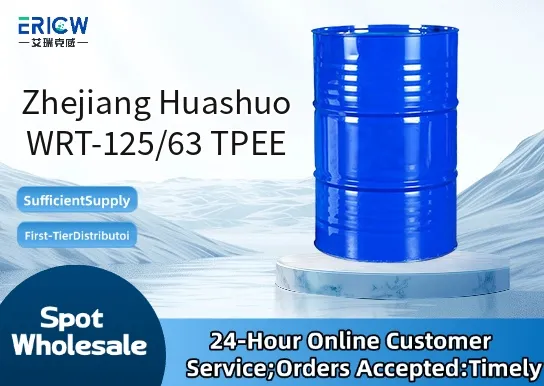
Excellent balance of thermoplastic processability and elastomeric performance.
High tensile strength and outstanding resilience at elevated temperatures.
Good resistance to oils, greases, and common industrial chemicals.
Low compression set for long-term sealing and dynamic component reliability.
Easy to process via injection molding, extrusion, and blow molding without pre-drying.
Automotive under-hood components including air ducts and sensor housings.
Industrial hoses and fluid transfer tubing requiring fatigue resistance.
Consumer electronics casings and protective covers demanding impact absorption.
Medical device components where biocompatibility-supporting processing is required.
High-performance sporting goods parts such as ski bindings and bicycle components.
| Chemical Type | Thermoplastic Polyester Elastomer (TPEE) |
| Product Form | Pellets |
| Appearance | Off-white to light beige granules |
| Primary Applications | Dynamic mechanical parts, seals, and flexible structural components |
| Key Features | High modulus, thermal stability up to 125°C continuous service |
| Benefits | Reduced part weight vs. thermosets; recyclable and reprocessable |
| Processing Method | Injection molding, extrusion, blow molding |
| Standard Packaging | 25 kg multi-layer moisture-proof bags in cardboard boxes |
Q1: What is the primary functional role of WRT-125/63 TPEE in polymer blends and thermoplastic elastomer formulations?
A: WRT-125/63 TPEE functions primarily as a high-performance thermoplastic elastomeric modifier—enhancing melt processability, improving tensile resilience, and contributing to balanced hardness and low-temperature flexibility in compounded systems.
Q2: Is WRT-125/63 TPEE compatible with common engineering thermoplastics such as polyesters, polypropylene, or polycarbonate?
A: Yes—it demonstrates good compatibility with aromatic polyesters (e.g., PET, PBT) and can be effectively blended with polypropylene-based systems when used with appropriate compatibilizers; compatibility with polycarbonate is limited and requires formulation evaluation.
Q3: How does WRT-125/63 TPEE perform under repeated flexing or dynamic mechanical stress?
A: Thanks to its segmented copolymer structure featuring hard segments (typically based on aromatic diisocyanates and crystallizable polyester) and soft segments (polyether or polyester), it delivers excellent fatigue resistance and long-term elasticity retention in cyclic loading applications.
Q4: What are the recommended drying and processing conditions prior to extrusion or injection molding?
A: Prior to processing, WRT-125/63 TPEE should be dried at 80–100 °C for 3–4 hours to reduce moisture content below 0.05%; typical melt processing temperatures range from 210 °C to 250 °C, depending on equipment and residence time.
Contact With Us:
E-mail: wangxingqiang@ericwchem.com
Have a Questions? Call Us:
Add:
Building A1, Jiete Industrial Park, Huangpu District, Guangzhou City, Guangdong Province, China