English
 Español
 tiếng việt
 русский
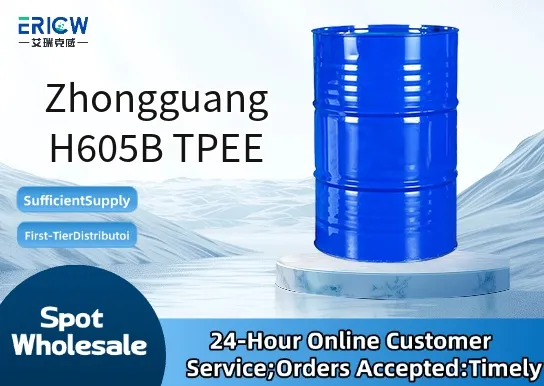
Excellent balance of elasticity and mechanical strength for dynamic load-bearing applications.
Outstanding resistance to hydrolysis, oils, and common industrial chemicals.
Broad service temperature range from –40 °C to +130 °C (short-term).
Good processability via injection molding, extrusion, and blow molding without drying pretreatment.
Recyclable thermoplastic structure with inherent toughness and fatigue resistance.
Automotive airbag covers and instrument panel components.
High-performance industrial hoses and hydraulic seals.
Consumer electronics protective casings and flexible connectors.
Medical tubing requiring biocompatibility and kink resistance.
Recreational equipment parts such as ski bindings and bicycle grips.
| Chemical Type | Thermoplastic Polyester Elastomer (TPEE) |
| Product Form | Pellets |
| Appearance | Off-white to light beige, free-flowing granules |
| Primary Applications | Dynamic elastomeric components requiring heat & chemical resistance |
| Key Features | Elastic recovery, dimensional stability, low compression set |
| Benefits | Reduced part weight vs. thermoset rubber; compatible with polypropylene overmolding |
| Processing Method | Injection molding, extrusion, blow molding |
| Standards Compliance | Meets ISO 10993-5 cytotoxicity screening (tested per request) |
Q1: What is the primary functional role of Zhongguang H605B TPEE in polymer blends and thermoplastic elastomer formulations?
A: Zhongguang H605B TPEE functions primarily as a high-performance thermoplastic elastomeric modifier—enhancing melt processability, improving tensile resilience, and contributing to balanced hardness-toughness profiles in TPE, TPR, and engineering plastic blends.
Q2: Is Zhongguang H605B TPEE compatible with common polyolefins such as PP and PE?
A: Yes, Zhongguang H605B TPEE demonstrates good compatibility with polypropylene (PP) and polyethylene (PE), especially when used with appropriate compatibilizers or in dynamically vulcanized systems. It is frequently employed to improve impact resistance and flexibility without significantly compromising stiffness.
Q3: How does Zhongguang H605B TPEE perform under elevated temperature conditions during processing and end-use?
A: Zhongguang H605B TPEE exhibits excellent thermal stability for a TPEE grade, maintaining mechanical integrity during standard extrusion and injection molding processes. Its service temperature range supports applications requiring sustained performance above 80 °C, with short-term exposure tolerance up to approximately 130 °C.
Q4: Can Zhongguang H605B TPEE be used in applications requiring oil or solvent resistance?
A: Yes—Zhongguang H605B TPEE offers notably better resistance to oils, greases, and non-polar solvents compared to many TPE-S or TPE-V grades, making it suitable for seals, gaskets, and under-hood automotive components where moderate chemical exposure is expected.
Contact With Us:
E-mail: wangxingqiang@ericwchem.com
Have a Questions? Call Us:
Add:
Building A1, Jiete Industrial Park, Huangpu District, Guangzhou City, Guangdong Province, China